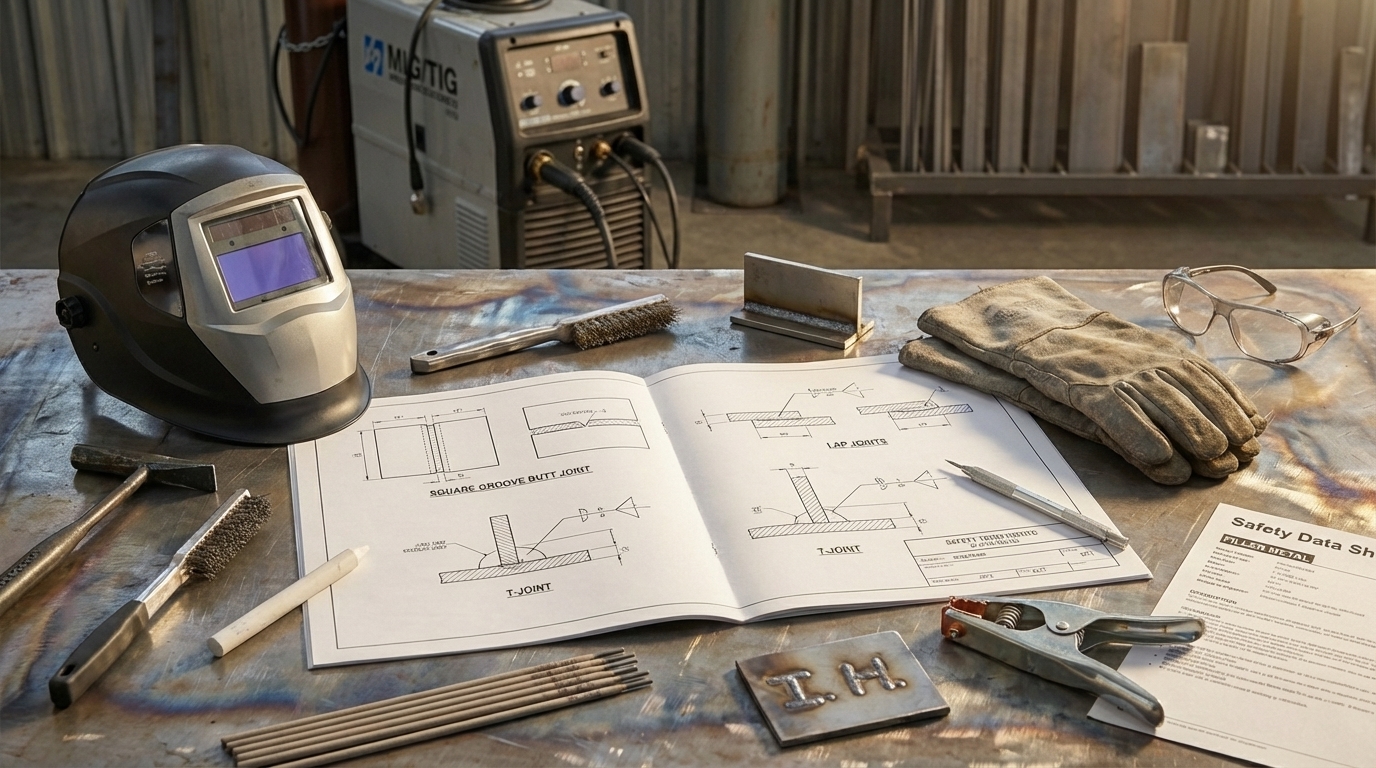
 Getting Started
Introduction & Overview
Welding is the skill of joining metal with heat, pressure, or both. It is one of the trades that quietly holds the modern world together — bridges, trailers, pipelines, bicycles, farm equipment, playgrounds, and skyscrapers all depend on strong welds. This merit badge introduces you to the science, safety, and hands-on practice behind that work.
Welding also teaches a very Scout-like habit of mind: prepare carefully, pay attention, and do the job right the first time. You will learn how to protect yourself, how different welding and cutting methods work, and how to make simple joints that your counselor can inspect and discuss with you.
Then and Now
Then — Fire, Forge, and Skilled Hands
Long before electric welding machines existed, metalworkers joined iron and steel by heating them in a forge and hammering them together. Blacksmiths made tools, hinges, wagon parts, and hardware for entire communities. As railroads, ships, and factories expanded during the 1800s and early 1900s, industry needed faster and more reliable ways to join metal than rivets, bolts, or forge work alone.
That need pushed welding forward. Oxy-fuel welding opened the door to heating and cutting metal with controlled flames, and electric arc welding made it possible to melt filler metal directly into a joint. What started as shop craft became a major industrial skill.
Now — Precision Work in Every Industry
Today, welding shows up almost everywhere heavy work gets done. Welders build and repair structural steel, farm machinery, pipelines, trailers, ships, race cars, pressure vessels, and custom metal art. Modern shops may use stick, MIG, TIG, plasma cutting, robotic welding cells, and computer-controlled fabrication tables.
Even with better machines, the fundamentals still matter: clean material, the right setup, careful safety habits, and steady technique. A strong weld is still the result of knowledge plus practice.
Get Ready!
Welding can feel exciting the first time an arc starts or a torch lights — and that is exactly why preparation matters. Before you think about bead shape or sparks, think about safety, setup, and control. If you build those habits first, the rest of the badge makes much more sense.
Kinds of Welding
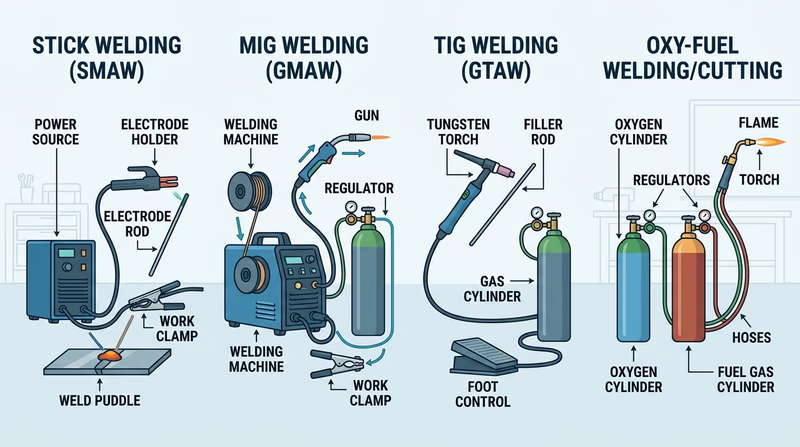
Welding is not one single process. Different jobs call for different heat sources, filler metals, shielding methods, and shop setups.
Shielded Metal Arc Welding (Stick)
Stick welding uses a coated electrode to create an electric arc between the rod and the metal. The coating helps protect the molten weld puddle and leaves behind slag that must be cleaned off after the weld cools. Stick welding is popular because the equipment is portable, works outdoors better than many gas-shielded processes, and handles dirty or rusty steel better than some cleaner shop methods.
Gas Metal Arc Welding (MIG)
MIG welding feeds wire continuously through a gun while shielding gas protects the weld from air. Many beginners like MIG because it is easier to start and stop cleanly, and the wire feed helps make smooth beads. It is common in school shops, fabrication shops, and auto-body work.
Gas Tungsten Arc Welding (TIG)
TIG welding uses a nonconsumable tungsten electrode and a shielding gas, usually with a separate filler rod. It takes more coordination than MIG or stick, but it gives excellent control and very clean welds. TIG is often used for thin metals, stainless steel, aluminum, and jobs where appearance matters.
Oxy-Fuel Welding and Cutting
Oxy-fuel equipment mixes fuel gas with oxygen to create a flame hot enough to weld, heat, braze, or cut metal. It is less common than arc welding for many modern shop welds, but it is still important because it teaches flame control and is widely used for heating and cutting.
Cutting Methods Work Alongside Welding
Most welders also spend time cutting, fitting, cleaning, and preparing metal. A weld can only be as good as the joint you prepared. That is why this badge includes both welding processes and metal-cutting methods: good fabrication starts before the weld begins.
Next Steps
You are about to start where every real welding class starts: hazard awareness. Before you can make a good weld, you need to understand what can injure you, what can damage the shop, and how to respond if something still goes wrong.