Req 3 — Welding Terms and Process Basics
This requirement is the “why it works” part of the badge. Once you understand the basic terms, welding stops looking like random sparks and starts making sense as a controlled process: heat creates a molten puddle, filler may be added, and the weld must be protected from the surrounding air while it solidifies.
Four key terms
Welding is the process of joining materials, usually metals, by causing them to fuse together. Depending on the process, that fusion may happen with heat alone or heat plus pressure.
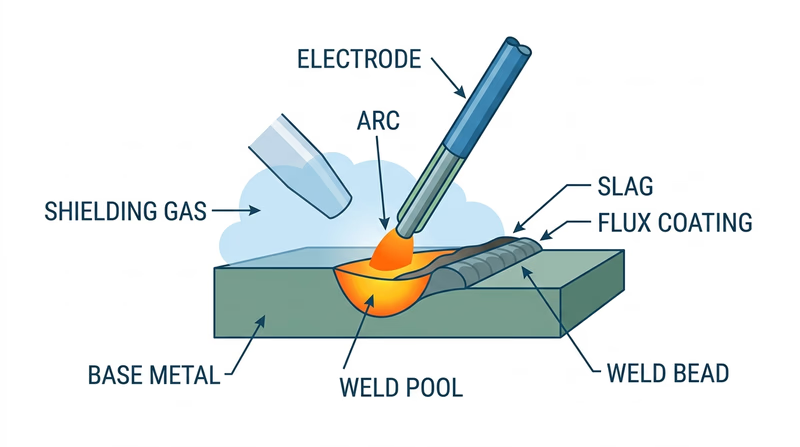
Electrode is the part of the welding circuit that carries current to create the arc. In some processes, the electrode is also consumed and becomes filler metal. In TIG, the tungsten electrode carries current but is not meant to melt into the joint.
Slag is the solid material left on top of some welds after the molten flux or impurities cool. In stick welding, slag helps protect the weld while it is hot, but it must be removed afterward so you can inspect the bead and continue welding cleanly.
Oxidation is a chemical reaction between a material and oxygen. In welding, too much oxidation is usually bad because it contaminates hot metal and weakens the weld area. In oxy-fuel cutting, though, controlled oxidation is exactly what cuts the metal.
What happens during welding
Most welding processes follow the same basic story:
- Energy is concentrated at the joint. This may come from an electric arc, a flame, resistance heating, or another source.
- The base metal heats up. In many processes, the edges of the joint begin to melt.
- Filler metal may be added. The filler helps build the joint and fill the gap.
- The molten weld pool is protected. Flux, shielding gas, or both keep the atmosphere from contaminating the hot metal.
- The weld cools and solidifies. The final bead becomes part of the joint.
How heat is generated
For the processes most Scouts will discuss in this badge, heat usually comes from one of two sources:
- Electric arc — current jumps across a gap between the electrode and the workpiece, producing intense heat.
- Oxy-fuel flame — fuel gas and oxygen burn in a controlled flame hot enough to heat, weld, or cut metal.
In stick welding, the arc forms between the covered metal electrode and the work. In MIG welding, the arc forms between a continuously fed wire electrode and the work. In TIG welding, the arc forms between a tungsten electrode and the work.
What kind of filler metal is added?
The answer depends on the process:
- Stick (SMAW) — the coated electrode itself is consumed, and its core becomes filler metal.
- MIG (GMAW) — a continuously fed wire acts as filler metal.
- TIG (GTAW) — a separate filler rod may be added by hand, or sometimes no filler is added at all.
- Oxy-fuel welding — filler rod may be added separately depending on the joint and task.
What protects the molten metal from the atmosphere?
The welding pamphlet explains this clearly in its discussion of shielding. In stick welding, the electrode coating breaks down and gives off vapors that shield the weld area from atmospheric contamination. That coating also creates slag. In gas-shielded processes such as MIG and TIG, an externally supplied gas protects the molten weld pool.
That is why terms like flux, shielding gas, and slag matter so much. If the molten puddle is left exposed to the atmosphere, contamination can weaken the weld.
A quick compare: stick, MIG, and TIG
| Process | Heat source | Filler metal | Protection from atmosphere |
|---|---|---|---|
| Stick (SMAW) | Electric arc | Consumable covered electrode | Flux gases and slag from electrode coating |
| MIG (GMAW) | Electric arc | Continuously fed wire | External shielding gas |
| TIG (GTAW) | Electric arc | Separate filler rod or none | External shielding gas |
How to explain this to your counselor
A strong explanation sounds connected, not memorized. Try a sentence like this:
“Welding joins metal by using concentrated heat to create a molten puddle. Depending on the process, the electrode may also be the filler metal or may only carry current. The puddle has to be protected from the atmosphere by flux, slag, or shielding gas so oxygen does not contaminate the weld.”
That one explanation ties together all four terms in a practical way.
Understanding Common Welding Terms—A Guide for Beginners (website) A beginner-friendly glossary that helps reinforce the shop vocabulary you will need when discussing welding processes with your counselor. Link: Understanding Common Welding Terms—A Guide for Beginners (website) — https://www.millerwelds.com/resources/article-library/understanding-common-welding-terms-a-guide-for-beginnersIn Req 2, you learned how to prepare the shop and protect yourself. The next step is preparing the metal itself by learning how welding shops cut material to size before joining it.