Req 4 — Mechanical and Thermal Cutting
Cutting is part of fabrication, not just prep work. Before metal can be fit, clamped, and welded, it usually has to be sized and shaped accurately. This requirement asks you to compare two big families of cutting methods and then describe one process well enough to show that you understand how it works in a real shop.
Mechanical cutting methods
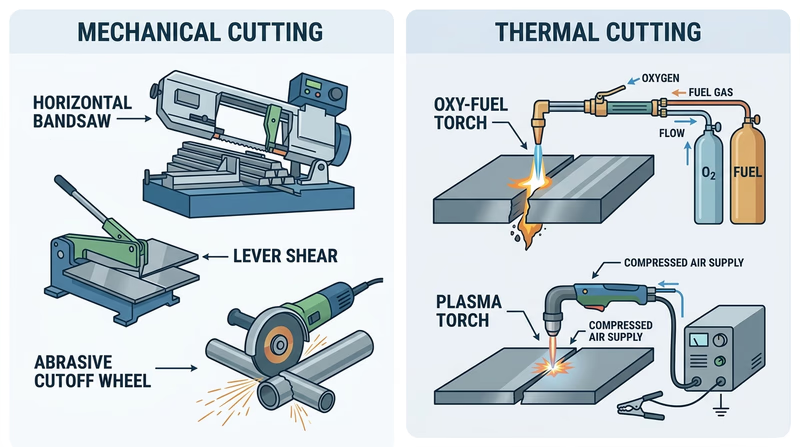
Mechanical cutting removes or separates metal by force, abrasion, or machine action rather than by melting or burning it. Common examples include:
- Shears
- Band saws
- Chop saws and cold saws
- Abrasive cutoff wheels
- Snips
- Nibblers
- Drill-and-cut combinations or machining tools in a fabrication setting
Mechanical methods are often chosen when the shop wants cleaner dimensions, less heat distortion, or a process that works well on thin stock and repeated cuts.
Thermal cutting methods
Thermal cutting uses heat to separate metal. The welding pamphlet specifically identifies oxy-fuel cutting and plasma arc cutting as two widely used thermal methods. Other thermal methods exist in industry, but these are the ones most connected to the badge.
In the pamphlet’s explanation of oxy-fuel cutting, a torch heats metal to kindling temperature and then a stream of oxygen oxidizes the metal. The burned metal is removed from the kerf, which is the narrow cut zone.
One process to know well: oxy-fuel cutting
Oxy-fuel cutting is a strong process to choose for your counselor discussion because the pamphlet explains both how it works and what its tradeoffs are.
How to use oxy-fuel cutting
At a basic level, the process works like this:
- Secure the workpiece and clear the area of combustibles.
- Check the torch, hoses, regulators, cylinders, and tip.
- Set the correct gas flow and light the torch safely.
- Adjust the flame correctly for the job.
- Preheat the metal at the starting point until it reaches kindling temperature.
- Trigger the cutting oxygen stream to begin the cut.
- Move steadily along the layout line while controlling torch angle, speed, and distance.
- Shut down the equipment in the correct order and handle the hot material safely.
You would not perform all of that alone without counselor supervision, but you should be able to describe the sequence.
One advantage and one limitation
The pamphlet gives you a useful answer here. It says the advantages of oxy-fuel cutting include low cost, portability, and versatility of cutting direction and size. A clear single advantage to discuss is portability: you can take the setup to the work instead of always bringing the work to a large stationary machine.
A clear limitation is that oxy-fuel cutting has poorer tolerances compared with machine tools. In plain language, it is not always the best choice when you need the cut to be extremely precise or clean.
How mechanical and thermal methods differ in practice
| Question | Mechanical cutting | Thermal cutting |
|---|---|---|
| What does the cutting? | Blade, wheel, shear, or machine force | Heat, flame, arc, or oxidation |
| Heat distortion risk | Usually lower | Usually higher |
| Common shop use | Straight cuts, repeated sizing, cleaner edges | Fast cutting, field work, thicker steel, irregular shapes |
| Main tradeoff | May require more machine setup or specific tooling | Can create heat-affected zones, sparks, fumes, and rougher edges |
When you talk with your counselor, connect cutting back to the final weld. A better cut usually means easier fit-up, better tacks, and less frustration later. That is exactly why the next requirement asks you to compare welding processes and set one up correctly.