Req 1 — Safety Before the Splash
This requirement builds your safety foundation before you start reading rapids or practicing maneuvers. You need to know three things first: what can hurt you on a river, what injuries are most likely, and what safety rules guide the whole trip.
- Requirement 1a covers river hazards and how to avoid them.
- Requirement 1b covers injuries and illnesses common in whitewater.
- Requirement 1c covers the formal safety systems used in Scouting and by American Whitewater.
Requirement 1a
A whitewater river does not have just one kind of danger. Some hazards pin boats. Some drain body heat. Some make it hard to steer. Some turn a small mistake into a rescue. Good paddlers scan for trouble early so they still have choices.
Branches, Trees, and Strainers
A strainer is anything like branches, brush, or a fallen tree that lets water pass through but can trap a person or boat. That is why strainers are so dangerous. The current keeps pushing, but the object does not move.
To anticipate this hazard, watch shorelines, outside bends, and places where high water may have carried wood into the channel. Prevent problems by staying well away from wood piles and avoiding the habit of drifting too close to shore. If you cannot avoid a strainer, get out well upstream and portage.
If someone is being swept toward a strainer, the goal is to avoid going underneath. Swim aggressively and try to climb on top of the obstruction, not through it. In Req 11, you will build the rescue skills that support that response.
Rocks, Ledges, and Pinning Hazards
Rocks shape the river, but they also create wrap points, pinning hazards, and awkward lines. A boat that hits a rock sideways can broach, meaning the current presses the hull broadside against the obstacle. That can stop the boat cold and make escape harder.
To prevent rock problems, keep your eyes up and choose a line before you reach the rapid. Maintain boat angle and momentum instead of drifting sideways into obstacles. If you do hit a rock, stay calm, keep weight where your instructor or trained leader directs, and avoid jumping into moving current unless leaving the boat is clearly the safer choice.
Hydraulics, Holes, and Lowhead Dams
A hydraulic forms when water drops over a ledge and curls back on itself. In the right place, that recirculating water can surf a boat or hold a swimmer. Lowhead dams are especially deadly because they can create a strong, uniform hydraulic across the whole river.
Scout ledges and drops from shore when needed. If you cannot clearly see a safe route, do not guess. Portaging is not failure. It is good judgment.
Wind and Weather Exposure
Strong wind can push a light boat off line, especially on wider rivers or on the quiet pools above and below rapids. A headwind can also tire you out before the technical paddling begins.
Cold water and cold air are another major whitewater hazard because water steals body heat much faster than air. Even on a sunny day, snowmelt-fed rivers can be cold enough to create real danger after a capsize.
Thunderstorms and Lightning
Moving water and open paddles make a bad mix during a storm. Lightning can strike open water, exposed paddlers, or high points along the river corridor. Heavy rain can also raise water levels and change rapids quickly.
At the first sign of thunder or lightning, get off the river as soon as it is safe to do so. Follow the trip leader’s instructions, move away from the water’s edge, and wait until the storm has fully passed before resuming. The Whitewater pamphlet’s Safety Afloat guidance also reminds paddlers to wait at least 30 minutes after the last thunder or lightning before going back on the water.
Hazard Scan Before You Launch
Ask these questions before the first paddle stroke
- What is in the current? Look for trees, brush, undercut rocks, and obvious strainers.
- What is the water level doing? Recent rain or dam release can change the run from familiar to serious.
- What is the temperature risk? Think about both air and water, not just whether the day feels warm.
- What is the weather trend? Wind and storms matter before you are committed to the river.
- Where is the exit? Know where you can scout, eddy out, or portage if the plan changes.
Requirement 1b
Whitewater first aid starts with prevention. Most river injuries happen because someone was cold, tired, sunburned, dehydrated, underdressed, or moving carelessly around slippery rocks and heavy gear.
Prevention for common river injuries
Dress for water temperature, not just air temperature. Wear sun protection even on cloudy days. Drink regularly before you feel thirsty. Carry boats with a team so one awkward lift does not become a shoulder injury. Keep feet protected with secure river shoes, and step carefully on wet rocks and shorelines.
Symptoms and signs to watch for
Cold-water shock can cause gasping and panic right after immersion. Hypothermia can start with shivering and clumsy movement, then progress to confusion and exhaustion. Heat illness may show up as headache, dizziness, nausea, heavy sweating, or later a hot, dry body and altered behavior. Head, neck, and back injuries can involve pain, numbness, weakness, or loss of normal movement after a hit or awkward fall.
For smaller injuries, learn the pattern: blisters begin as hot spots, cuts bleed and can get dirty fast, sprains and strains cause swelling and pain with movement, and a shoulder dislocation often looks obviously out of place and hurts severely.
First aid priorities on the river
Start with scene safety. You cannot help well if you are also in current, under a boat, or exposed to lightning. Once the scene is stable, handle life threats first—airway, breathing, and severe bleeding. Then protect the injured person from cold and continue assessment.
Requirement 1c
This part names two formal safety systems, so it helps to know what they actually say. Safety Afloat is Scouting America’s boating safety framework. The American Whitewater safety guidelines add whitewater-specific advice about swimming ability, river hazards, helmets, life jackets, and not paddling alone.
The nine points of Safety Afloat
From the Whitewater pamphlet, the nine points are:
- Qualified supervision
- Personal health review
- Swimming ability
- Life jackets
- Buddy system
- Skill proficiency
- Planning
- Equipment
- Discipline
Each one closes a different safety gap. Qualified supervision and skill proficiency make sure people are not attempting water beyond their ability. Planning and equipment prepare the group for weather, route changes, and emergencies. Discipline matters because rules only work when everyone follows them.
Key American Whitewater safety guidelines to know
The Whitewater pamphlet highlights these points from American Whitewater’s safety guidance:
- Be a competent swimmer.
- Wear a life jacket.
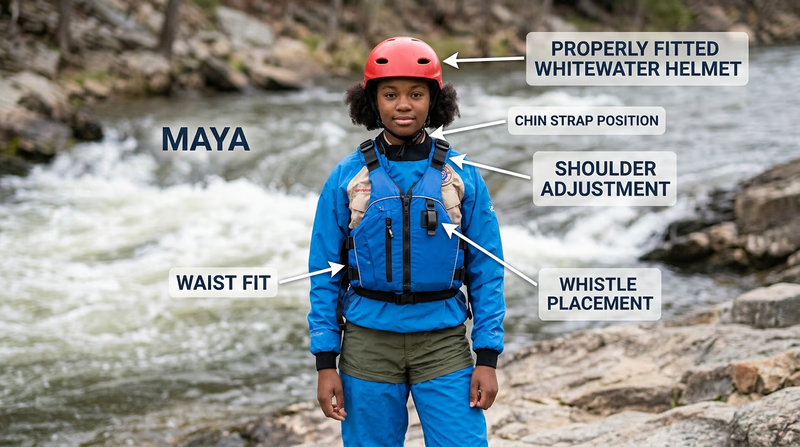
- Wear a solid, correctly fitted helmet.
- Do not boat out of control.
- Be aware of river hazards.
- Avoid broaching.
- Avoid boating alone.
Those guidelines are more specific to rapids. They focus on the reality that moving water adds rocks, holes, strainers, pinning hazards, and fast-changing conditions.
Why life jackets and helmets are non-negotiable
A life jacket does not just help weak swimmers. In whitewater, even a strong swimmer can get stunned, tired, cold, or separated from the boat. A properly fitted U.S. Coast Guard–approved life jacket keeps your airway higher and buys time for self-rescue or team rescue.
A helmet protects you from rocks, paddles, and the boat itself. The Whitewater pamphlet notes that properly fitted helmets must be worn when paddling rivers with Class II rapids or higher. That makes sense because even a simple flip can swing your head into something hard.
What your counselor wants to hear
Use these points when discussing Safety Afloat and river safety rules
- Name the systems: Safety Afloat gives the overall framework; American Whitewater adds whitewater-specific guidance.
- Explain the purpose: These rules reduce predictable risks before the trip starts.
- Connect rules to real hazards: Buddy system, helmets, life jackets, and planning all matter because rivers change fast.
- Show judgment: Good paddlers follow the rules even when the rapid looks easy.
The rest of this guide keeps building on these ideas. In Req 2a, you will learn to recognize what the river surface is telling you before you commit to a line.