Req 10 — Core Moving-Water Maneuvers
This requirement is the heart of whitewater boat handling. Every move here shows up on real rivers, often in sequence. The current may be gentle enough for practice, but the habits you build need to be strong enough to survive noise, waves, and pressure later.
Requirement 10a
Launching and landing in moving water
A clean launch starts with the boat pointed and organized before it enters current. A clean landing ends with the boat under control before it hits shore or another paddler.
Why this matters
Bad launches drift sideways into trouble. Bad landings pin boats against shore, tangle paddles, or dump people into shallow moving water.
How to do it well
Choose a calm launch or landing spot when possible, communicate with partners, keep the bow aligned, and be ready with immediate strokes the moment the boat is afloat.
Requirement 10b
Forward control in moving water
Forward travel in current is not just about power. It is about staying on line while the river keeps trying to rotate or slide the boat.
Why this matters
If you cannot travel straight with purpose, every later move becomes harder because you are always starting from a crooked boat.
How to do it well
Use clean forward strokes, early corrections, and enough attention to boat angle that the current does not quietly steal your line.
Requirement 10c
Backpaddling in control
Backpaddling lets you slow down, avoid overshooting an eddy, or reposition without spinning wildly.
Why this matters
A boat that can move backward with control has more options when the first plan changes.
How to do it well
Keep the boat balanced, eyes up, and corrections small so the hull does not snake from side to side.
Requirement 10d
Ferrying upstream
An upstream ferry crosses current while holding a boat angle that gains position against the downstream push.
Why this matters
It helps you move across the river deliberately instead of simply drifting wherever the current chooses.
How to do it well
Set your angle, edge appropriately, keep paddling, and let the hull slice across the current instead of going broadside.
Requirement 10e
Ferrying downstream
A downstream ferry also crosses current, but the boat angle and feel are different because you are moving with more downstream energy.
Why this matters
This move helps set up lines, avoid hazards, and reposition for the next rapid feature.
How to do it well
Choose the angle early, stay balanced over the hull, and avoid flattening the boat right as the current starts pushing harder.
Requirement 10f
Eddy turns
An eddy turn moves the boat from the main current into calm water behind an obstacle or along a sheltered edge.
Why this matters
Eddies are your river parking spots. They let you stop, regroup, scout, or set safety.
How to do it well
Approach with angle, edge correctly as you cross the eddy line, and let the boat carve into the calm water instead of slamming flat into the seam.
Requirement 10g
Peel-outs
A peel-out is the reverse of an eddy turn. You leave calm water and enter the main current under control.
Why this matters
Every time you leave an eddy to continue downstream, you are trusting this move.
How to do it well
Build angle before crossing the seam, keep power on the blade, and edge the hull so the current joins the move instead of flipping or stalling the boat.
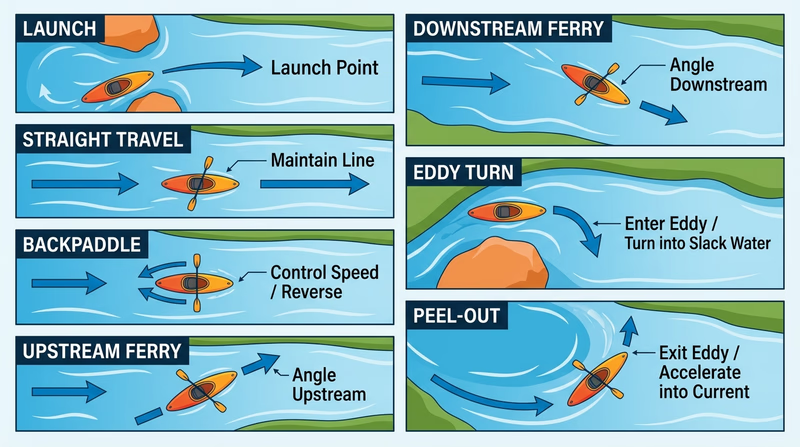
What connects all seven maneuvers
Core habits that make moving-water practice safer
- Eyes up: Boats follow attention.
- Angle before speed: Good setup beats frantic correction.
- Edge with your hips: Do not lean your whole body out of balance.
- Keep paddling: Stopping at the seam is usually what creates trouble.
By now you can move a boat where you want it. The next requirement teaches what to do when the run still goes wrong and somebody ends up swimming.