Req 11 — Rescue and Recovery Skills
Rescue skills are what keep a bad moment from becoming a crisis. The Whitewater pamphlet emphasizes a simple priority: people first, gear second. Boats and paddles can be replaced. People cannot.
Requirement 11a
Self-rescue after a capsize
The pamphlet explains that when you capsize, you should make the safety of the people involved your top priority and practice until recovery reactions become automatic.
Procedures to follow
Key steps from the pamphlet include holding onto the boat when you can, staying upstream of it so you are not pinned between boat and rock, swimming aggressively for shore in certain situations, and floating on your back with feet high if you must ride out current before escaping.
Wet exit if necessary
If you are in a kayak or tightly connected solo canoe and must get out, a wet exit needs to be calm and practiced. Get free of the boat cleanly, keep hold of it when possible, and avoid standing in fast water above your knees because foot entrapment is a serious hazard.
Requirement 11b
Throw-rope rescue technique
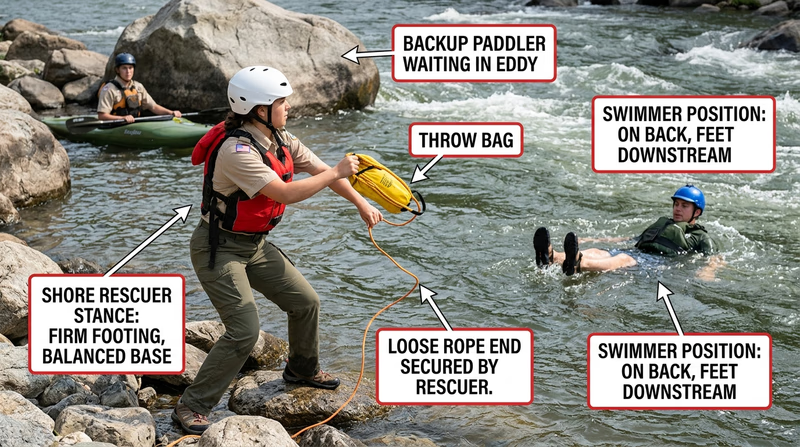
The pamphlet describes a throw rope as a floating line stored in a throw bag. To use it, keep hold of the free end, get the swimmer’s attention by yelling “Rope!” or using a whistle blast, then throw the bag toward or slightly beyond the swimmer’s head.
Why technique matters
A throw rope only works if the rescuer stays anchored and the swimmer can grab the rope correctly. A wild throw or a tied-off rope can turn help into a new hazard.
Practice habits
The pamphlet specifically encourages practice. If your first accurate throw happens during a real rescue, you waited too long to train.
Requirement 11c
Receiving a throw rope as a swimmer
The swimmer should grab the rope, roll onto the back, hold the rope across the chest and over the shoulder, and let the rescuer bring them in or swing them toward shore.
Why body position matters
That body position helps the swimmer face upstream enough to deal with obstacles while avoiding being jerked into an awkward twist.
Critical safety rule
The pamphlet is clear: do not wrap the rope around a hand or tie it to your body. Just hold on. If you become entangled, a fixed connection is far more dangerous.
Requirement 11d
Where portaging is appropriate
Portage around hazards that exceed the group’s skill, around features with serious consequence, or anywhere the line is unclear and the risk is not worth it.
When to choose portaging
Choose it before the group drifts into the hazard, not after. Early decisions are safer than last-second scrambling.
How to portage well
Land in control above the hazard, organize gear, choose a safe walking route, and move as a team. This is the practical version of the judgment you already studied in Req 2d.
Requirement 11e
How the whitewater buddy system works
The Whitewater pamphlet’s Safety Afloat section says all participants are paired as buddies who stay aware of each other’s situation and are ready to sound an alarm and help immediately. On trips with several craft, each boat should also have a buddy boat.
Why at least three people and three craft matter
In whitewater, one paddler may become the rescuer and another may be the swimmer. A third paddler or craft adds support, carries extra gear, and helps the group avoid becoming a two-person emergency with no backup.
How to apply it on the river
Know who you are watching, who is watching you, and where the nearest support boat is. A buddy system only works when everyone treats it as an active responsibility.
Rescue mindset
A simple order for handling trouble on the river
- Protect people first: Ignore loose gear until people are safe.
- Stabilize the scene: Catch eddies, get to shore, and control panic.
- Use practiced signals: Rescue begins with clear communication.
- Choose the safest help: Throw rope, self-rescue, or portage—not whatever looks dramatic.
The final requirement puts everything together in real trip planning and real river time.