Req 2a — River Features at a Glance
Reading whitewater is like reading a moving map. The shapes on the surface tell you where the current accelerates, where it slows, where the bottom is shallow, and where the consequences get more serious. If you can sketch the flow lines correctly, you are proving that you understand what the water is doing before your boat reaches it.
Features that usually point to the safest route
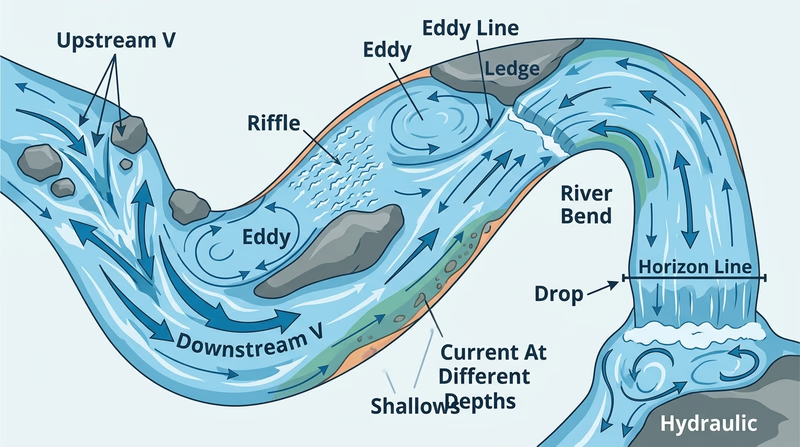
An upstream V forms when water splits around an obstacle and then rejoins below it. The point of the V aims upstream, and the open part of the V points downstream. That usually marks a deeper tongue of water and often shows the cleaner line through a rapid.
An eddy is a calm or slower-moving pocket beside the main current, usually behind a rock or along the bank. The boundary between the main current and the eddy is the eddy line. That line matters because it can grab the bow or stern when you cross it.
A riffle is a shallow, broken section where small waves or ripples show that the bottom is rougher and the current is speeding up over rocks. Riffles are often easy to read, but they can still hint at where the channel is deeper.
Features that warn you to look harder
A downstream V points downstream and often signals a rock, hole, log, or other obstruction. Think of it as the opposite of the clean tongue. It tells you water is piling around something instead of opening into a safe lane.
A horizon line appears where the river seems to disappear. That means the water is dropping away from your sight line. Sometimes it is a mild ledge. Sometimes it hides a bigger rapid. Either way, a horizon line tells you that you may need to scout before continuing.
A ledge is a shelf-like drop in the riverbed. A drop is a more obvious descent where water loses elevation. These can create waves, hydraulics, or both below them.
A hydraulic forms when water curls back toward the drop after pouring over it. On the surface, it may look like a pile or a foamy line. Underneath, the current may be recirculating.
Features shaped by depth and channel shape
A river bend changes speed across the channel. The outside bend is often faster and deeper because the current scours the bank. The inside bend is often slower and shallower.
Shallows usually show themselves through smaller standing ripples, exposed rocks, lighter-colored bottom, or spread-out current. They are not automatically dangerous, but they can grab a hull, force you off line, or leave you scraping instead of paddling.
Current at different depths matters because surface water and deeper water do not always move at the same speed. Friction with the riverbed slows the lower water, while faster surface current can push your boat differently than your paddle expects. That is one reason edging and angle control matter so much.
How to sketch a rapid
A simple order for drawing the current
- Mark the main tongue first: Show the strongest current heading downstream.
- Add obstacles next: Rocks, bends, and ledges explain why the current changes shape.
- Show calm water pockets: Eddies belong behind sheltering obstacles or along slower margins.
- Indicate danger zones: Downstream Vs, hydraulics, and hidden drops should stand out.
- Check your logic: If your arrows do not match the shape of the riverbed, redraw them.
In Req 2b, you will zoom in on one of the river’s most recognizable features: whitewater waves.