Req 2b — How Whitewater Waves Form
A whitewater wave forms when fast-moving water is forced to rise, pile up, and then fall again. Usually that happens because the current is being pushed over a shallow spot, squeezed between obstacles, or dropping over an uneven riverbed. The water wants to keep moving downstream, but the bottom and channel shape force it into a repeating shape you can see from the surface.
How standing waves form
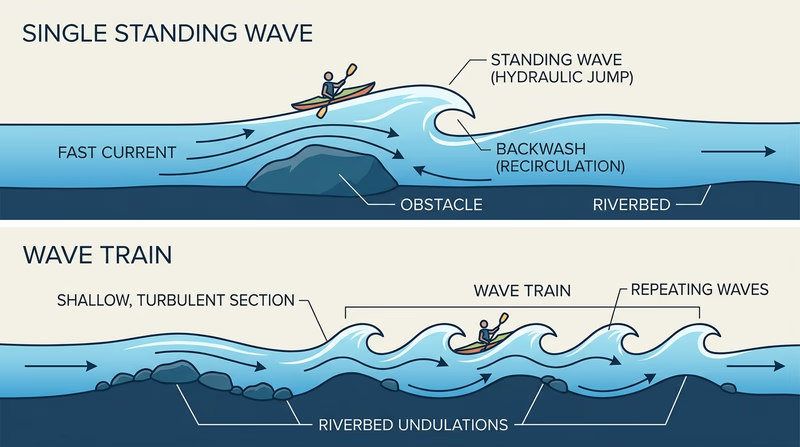
A standing wave stays in one place even though the water itself is moving through it. That can sound strange at first. Think of it like a flag flapping in the wind: the flag stays attached in one spot, but the air keeps moving past it.
On a river, a standing wave often forms when current hits a rock shelf, a ledge, or a sudden rise in the bottom. The water piles up, crests, and drops. New water keeps replacing it, so the wave shape remains roughly fixed in the rapid.
Standing waves can be friendly or serious. Small ones may simply bounce the boat. Larger ones can slow you, turn your bow, fill an open canoe, or hide holes behind them.
How wave trains form
A wave train is a series of standing waves lined up one after another. This usually happens when the current stays fast over a longer stretch of uneven bottom. Instead of one rise and fall, the river repeats the pattern several times.
Wave trains matter because they can wear out a paddler’s balance and timing. A boat that enters crooked may get knocked more off line with each wave. A boat that enters with speed and the right angle often rides through much more cleanly.
What changes the size and shape of waves
Several factors affect what kind of waves you see:
- Current speed: Faster water usually builds steeper, more powerful waves.
- Depth: Shallower water often forces the surface to react more sharply to the bottom.
- Obstacle shape: Rounded rocks, shelves, and narrow channels all change the flow differently.
- Flow level: More water can wash out some features and make others bigger or more retentive.
That last point connects directly to Req 5, where you will think about how river level can change a run’s classification.
In Req 2c, you will connect river reading to boat control by learning how edging helps you cross current cleanly.