Req 2c — Edge Control in Current
Edging means tipping the boat while keeping your upper body balanced over the hull instead of flopping sideways with it. That one skill makes eddy turns cleaner, ferries smoother, and sudden catches less likely. In moving water, the current reacts to the shape of the hull, so a small change in boat angle can completely change what happens next.
Requirement 2c1
Boat edge when entering and exiting an eddy
When crossing an eddy line, edge the boat so the current meets the hull cleanly instead of grabbing the upstream edge and flipping you. In plain language, you want the downstream edge of the hull slightly raised when it might catch current.
Why edging matters at the eddy line
The eddy line is a seam between water moving in different directions or at different speeds. If your boat hits that seam flat, the current can shove the bow or stern unpredictably. If the wrong edge is buried, the current can catch it and roll the boat.
How to do it without leaning your body
Keep your head centered over the boat. Let the boat tilt under you by using your hips and knees, not by throwing your shoulders out over the water. Think “boat moves, body stays balanced.” That gives you more stability and makes it easier to keep paddling.
Requirement 2c2
Boat edge when ferrying downstream and upstream
A ferry is a controlled crossing from one side of the river to the other while the current carries you downstream to some degree. Your angle to the current and your hull edge work together. If either one is wrong, you lose the ferry.
Why edging matters during a ferry
During a ferry, current presses strongly against the side of the boat. The right edge helps the hull slice across the current instead of being shoved broadside. The wrong edge can catch and flip the boat faster than many beginners expect.
How to do it without leaning your body
Set your ferry angle first, then engage a modest edge using your hips. Keep your torso upright and active. Paddle with purpose, but do not over-muscle it. The goal is to let the hull work with the current rather than fighting every ounce of water by brute force.
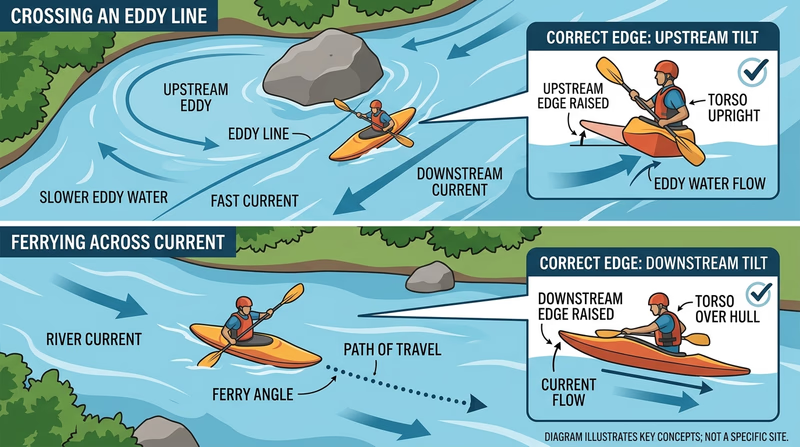
Body position for edging
What to remember when the water starts pushing back
- Head over the boat: Stability starts at the top.
- Use hips and knees: They tilt the hull without collapsing your posture.
- Keep paddling: Momentum helps the boat finish the move.
- Look where you are going: Your body often follows your eyes.
If you want a clean eddy turn or ferry later in Req 10, this is one of the quiet fundamentals doing most of the work.