Req 6 — River Signals That Matter
On a noisy river, normal conversation disappears fast. Water drowns out voices, distance spreads the group out, and paddlers may need an answer right now, not after a long explanation. That is why whitewater groups use a small set of clear, universal signals.
The Whitewater pamphlet says to review river signals before every trip. That makes sense because a signal is only useful if everyone already agrees on what it means.
The key river signals
From the pamphlet’s river-signal section:
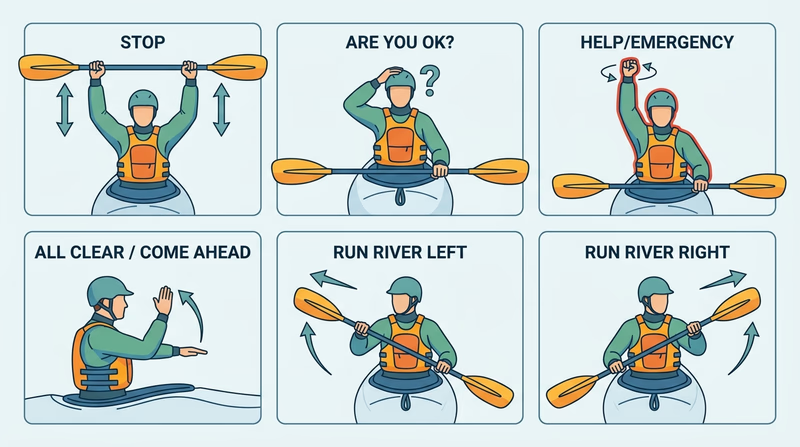
- Stop! Raise and lower a paddle horizontally over your head, or hold both arms out at right angles and wave them up and down.
- Help/emergency Give three long whistle blasts while waving your paddle, helmet, or throw rope over your head.
- Are you OK? Raise one arm over your head, bend the elbow outward, and tap your helmet with your fingertips. To answer that you are OK, return the same signal.
- All clear / Come ahead / Run down the center Hold your paddle vertically above your head with the blade flat for visibility.
- Run river left Face upstream after you have run the drop and point your paddle at about a 45-degree angle toward river left.
- Run river right Face upstream after you have run the drop and point your paddle at about a 45-degree angle toward river right.
Why the signals matter
These signals let the lead paddler warn the group, confirm a swimmer’s condition, or direct the next boat toward the safe route. A clean signal can prevent a second paddler from making the same mistake as the first. It can also speed up a rescue because nobody wastes time guessing what is being asked.
Good signal habits
How to make sure the group actually understands you
- Review signals before launch: Do not assume everyone remembers them.
- Use big motions: Small gestures vanish against whitewater and distance.
- Confirm understanding: An OK return signal matters.
- Keep whistle accessible: A life-jacket-mounted whistle is only useful if you can reach it instantly.
The next requirement helps you understand how different boats are designed for moving water, which affects how they respond to all of these signals and river features.