Req 1a — Backcountry Injuries & Conditions
Backcountry first aid is different from first aid at home. You’re miles from a hospital, cell service may not work, and you can’t just call 911. Your job as a first responder in the wilderness is to stabilize the patient, keep them comfortable, and get help to them—or get them to help. Prevention is even more important: many backcountry injuries are completely avoidable with the right preparation and awareness.
Below are the 13 injury and condition types you need to understand. Each one demands a different response, but they all follow the same principle: assess the situation, manage what you can with what you have, and prioritize getting medical help.
Dehydration
Dehydration creeps up on you. You might not feel thirsty until it’s too late, especially at high altitude or during intense activity. Your body needs water to regulate temperature, deliver oxygen, and keep your brain working—all critical in a survival situation.
Prevention: Drink water regularly, not just when you’re thirsty. Aim for small sips every 15-20 minutes during activity. Avoid alcohol and excessive caffeine, which dehydrate you faster. Wear light-colored clothing to reduce heat stress.
Recognition: Early signs include dark urine, dry mouth, fatigue, and difficulty concentrating. Advanced dehydration brings dizziness, confusion, rapid pulse, and cessation of sweating (ironically, a bad sign).
First Aid: Move the patient to shade and have them drink water slowly. If they can’t keep water down, let them sip small amounts or suck on ice. Cool their skin with water if they’re overheated. Severe dehydration may require IV fluids—get medical help.
Heatstroke
Heatstroke is a life-threatening emergency where your core body temperature rises above 104°F and your body’s cooling system fails. Unlike heat exhaustion, heatstroke damages your organs and can kill you in hours.
Prevention: Don’t push yourself in extreme heat. Take frequent breaks in shade. Wear light, breathable clothing. Drink water constantly—don’t wait until you’re thirsty. Know the early warning signs of heat exhaustion (heavy sweating, weakness, nausea) and back off activity immediately.
Recognition: Heatstroke victims may stop sweating (the body has given up trying to cool itself). They may be confused, aggressive, or unconscious. Their skin is hot to the touch.
First Aid: This is a medical emergency. Cool the patient aggressively—pour cold water over them, immerse them in a cool stream if available, or pack them in ice if you have it. Get emergency help immediately. Don’t assume they’ll recover on their own.
Hypothermia
Hypothermia—a core body temperature below 95°F—is silent and deadly. It can strike in mild weather if you’re wet and windy, and it clouds your judgment so you don’t realize how much danger you’re in.
Prevention: Layer your clothing so you can adjust as you heat up or cool down. Avoid cotton, which traps moisture. Stay dry—wet clothes rob your body heat 25 times faster than air alone. Eat regular meals to fuel your body’s heat production. Never stay in wet clothes.
Recognition: Early signs are shivering, confusion, and clumsiness. Advanced hypothermia brings paradoxical undressing (victims removing clothing despite being cold), slurred speech, slow pulse, and eventually unconsciousness. Shivering may stop, which is actually a very bad sign.
First Aid: Get the patient warm, but gently. Remove wet clothing and replace with dry layers. Wrap them in blankets or a sleeping bag. Warm them from the core outward—warm drinks help, but avoid alcohol. Severe hypothermia patients should be handled carefully (rough movement can trigger dangerous heart rhythms) and evacuated to a hospital.
Shock
Shock is your body’s response to severe stress—blood loss, trauma, severe dehydration, or allergic reaction. Your blood pressure drops, organs don’t get enough oxygen, and the patient can die even if the original injury wasn’t fatal.
Prevention: Prevent severe injuries through careful hiking, using proper equipment, and staying aware of hazards. If injury occurs, manage it quickly—control bleeding, immobilize fractures, and keep the patient calm.
Recognition: Shock victims are pale, cold, clammy, and anxious. Their pulse is rapid and weak. They may be confused or unconscious. Breathing is shallow and fast.
First Aid: Lie the patient flat with legs elevated (unless head or spinal injury is suspected). Keep them warm with blankets. Control any bleeding. Keep them calm and reassured. Don’t give them food or drink (they may need surgery). Evacuate to medical help urgently.
Blisters
Blisters are fluid-filled pockets that form when skin is rubbed repeatedly. They’re painful and can become infected, making hiking impossible.
Prevention: Wear properly fitting boots that you’ve broken in. Wear moisture-wicking socks (wool or synthetic, not cotton). Change socks immediately if they get wet. Keep feet dry. If you feel a hot spot (early blister), stop and tape it before a full blister forms.
Recognition: A blister is a fluid-filled bubble on the skin, usually on heels, toes, or ball of the foot. It’s tender to the touch.
First Aid: Don’t pop the blister unless it’s so large it prevents walking. If you must drain it, use a sterilized needle, make a small hole, and press out fluid gently. Cover with antibiotic ointment and a bandage. Keep it clean to prevent infection.
How to Prevent and Treat Blisters Dermatological guidance on blister prevention and treatment.Eye Injuries
A foreign object in your eye, a scratch to the cornea, or exposure to harmful substances can damage your vision—and in the backcountry, you can’t just pop into an eye clinic.
Prevention: Wear sunglasses or a hat with a brim. Be careful around campfire smoke. Wash hands before touching your eyes.
Recognition: Pain, redness, tearing, light sensitivity, and blurred vision all indicate eye injury. Something may be visibly stuck in the eye.
First Aid: For a foreign object, rinse the eye gently with clean water or saline solution. Blink repeatedly to help flush it out. Don’t rub. If the object won’t come out, cover the eye loosely and evacuate. For chemical exposure, flush with water for at least 15 minutes. For a scratched cornea, cover the eye and seek medical help.
5 Ways To Safely Remove Something Stuck In Your Eye Video demonstrating safe techniques for removing foreign objects from your eye.Ankle and Knee Sprains
A twisted ankle on a trail miles from the trailhead can turn a day hike into an evacuation. Sprains range from minor (hurts but you can walk) to severe (torn ligaments, can’t put weight on it).
Prevention: Wear boots with ankle support. Watch where you’re stepping. Stay aware of trail conditions. Strengthen your ankles with balance exercises at home.
Recognition: Sprains cause sudden pain, swelling, and bruising. The joint feels unstable. Severe sprains make weight-bearing impossible.
First Aid: RICE protocol: Rest, Ice (if available), Compression (wrap with elastic bandage), Elevation. Take over-the-counter pain relievers if you have them. Immobilize the joint to prevent further damage. If the person can’t walk out, you may need to call for rescue or fashion a stretcher.
Bug Bites: Chiggers, Ticks, Mosquitoes, and Biting Gnats
Tiny bugs cause outsized misery. Chiggers and ticks burrow into skin; mosquitoes carry disease; biting gnats swarm in clouds. Understanding each helps you prevent and treat their bites.
Chiggers
Chiggers are larvae of mites that burrow into skin and feed on skin cells, causing intense itching. They’re most active in warm months in grassy, brushy areas.
Prevention: Tuck pants into socks. Use insect repellent on exposed skin and clothing. Shower after hiking and wash clothes in hot water.
First Aid: Don’t scratch (infection risk). Apply hydrocortisone cream and antihistamine. Nail polish or sulfur powder smothers them, but they’ve usually already burrowed deep. Itching lasts weeks—you just have to wait it out.
Ticks
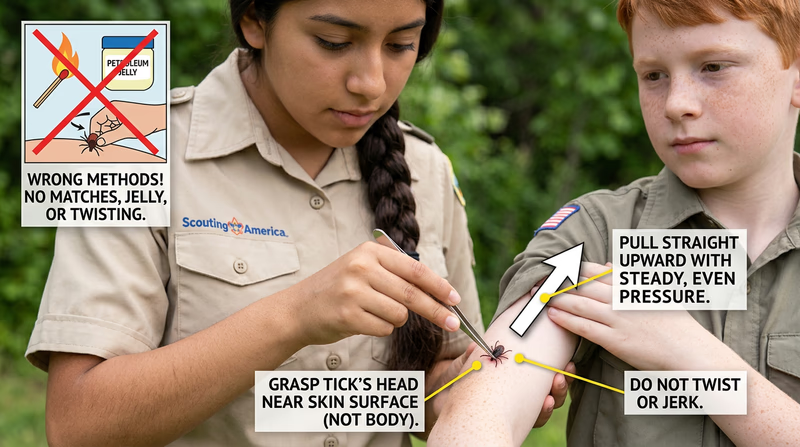
Ticks attach to skin and feed on blood. Some carry Lyme disease or other infections. Removal is crucial—ticks must be removed carefully to avoid leaving mouth parts in the skin.
Prevention: Wear long sleeves and pants. Tuck pants into socks. Check yourself and others for ticks after hiking. Use repellents rated for ticks.
First Aid: Grasp the tick with tweezers as close to the skin as possible and pull straight out steadily. Don’t twist or jerk. Don’t use fire, petroleum jelly, or nail polish—these can make the tick regurgitate infected material into the wound. Save the tick in a plastic bag for identification if the person develops symptoms later.
Mosquitoes
Mosquitoes transmit diseases like West Nile Virus and dengue fever. Avoid them if possible; treat bites if not.
Prevention: Use insect repellent with DEET (20-30% for adults). Wear long sleeves and pants, especially at dawn and dusk when mosquitoes are most active. Camp away from standing water.
First Aid: Avoid scratching. Apply hydrocortisone cream or calamine lotion for itching. Antihistamine tablets help if bites are severe.
Preventing and Treating Mosquito Bites Prevention strategies and itch relief for mosquito bites.Biting Gnats
Biting gnats (no-see-ums) are tiny and hard to see, but their bites itch intensely. They swarm near water, especially at dawn and dusk.
Prevention: Insect repellent helps, but they’re persistent. Head nets and fine-mesh clothing offer the best protection. Smoke from a campfire can repel them.
First Aid: Same as mosquitoes—avoid scratching, use hydrocortisone cream or antihistamine. The itching is intense but temporary.
Bee Stings
Most bee stings are just painful annoyances, but for allergic individuals, they’re life-threatening emergencies.
Prevention: Don’t swat at bees. Wear neutral colors (bees are attracted to bright colors). Don’t use perfumed soaps or lotions. Avoid wearing flowers or floral patterns. If you encounter a hive, back away slowly and quietly.
Recognition: Normal sting: sharp pain, redness, swelling. Allergic reaction: difficulty breathing, swelling of lips/throat, hives, dizziness. Anaphylaxis is a medical emergency.
First Aid: Remove the stinger by scraping (don’t squeeze tweezers, which can inject more venom). Wash the area. Apply ice and take antihistamine or pain reliever. For allergic reactions, use an epinephrine auto-injector (EpiPen) if available and call for emergency help immediately.
Spider Bites
Most spiders are harmless, but two North American spiders are medically significant: black widows (shiny black with red hourglass marking) and brown recluse (brown with violin-shaped marking on back).
Prevention: Shake out sleeping bags and shoes before use. Wear gloves when moving logs or rocks. Don’t reach into dark spaces without looking first.
Recognition: Most spider bites cause mild redness and itching. Black widow bites cause severe muscle pain, cramping, and sometimes numbness. Brown recluse bites cause tissue damage—the bite site blackens as flesh dies.
First Aid: Clean the bite. Apply ice. For severe bites or unknown spiders, evacuate to medical help. There are antivenins for black widow and brown recluse bites if available at a hospital.
Scorpion Stings
Scorpions are found in warm, dry regions of the southwestern United States. Most stings are painful but not dangerous; a few species have venom that causes serious symptoms.
Prevention: Wear shoes and gloves. Shake out sleeping bags and clothing before use. Check boots before putting them on. Be careful when moving rocks or firewood.
Recognition: Local reaction: pain, redness, swelling at the sting site. Systemic reaction: numbness around the mouth, difficulty swallowing, muscle twitches, or respiratory distress (rare but serious).
First Aid: Wash the sting site. Apply ice. Take pain relievers as needed. If the sting causes numbness, swelling of the throat, or difficulty breathing, evacuate to medical help.
Scorpion Stings—Symptoms and Causes Medical overview of scorpion sting severity and treatment.Wild Mammal Bites
Rabies is the main concern with wild mammal bites. Raccoons, bats, and foxes are common rabies vectors in North America.
Prevention: Don’t approach or feed wild animals. Store food securely to avoid attracting animals to camp. Don’t reach into spaces where animals might hide.
Recognition: Bite wounds vary widely depending on the animal. Rabies symptoms appear weeks or months after infection and are nearly always fatal once symptoms appear.
First Aid: Wash the wound thoroughly with soap and water for at least 5 minutes. Apply antibiotic ointment. Cover with a bandage. Get medical help immediately—rabies post-exposure prophylaxis (shots) is effective only if given before symptoms appear. Document what animal bit you, if possible.
Venomous Snake Bites
Only a handful of venomous snakes live in North America (rattlesnakes, cottonmouths, copperheads, and coral snakes). Most bites happen when people try to catch or kill the snake.
Prevention: Watch where you step and place your hands. Wear boots and long pants. Make noise while hiking—snakes usually flee if they hear you coming. Never approach a snake.
Recognition: Fang marks, pain, swelling, discoloration, and tissue damage indicate a bite. Some bites are “dry” (no venom injected), but assume all snake bites are venomous until proven otherwise.
First Aid: Keep the limb immobilized and at heart level. Remove jewelry (swelling will trap it). Clean the wound gently. Get emergency medical help immediately—antivenom is the only effective treatment and must be given within hours. Don’t apply tourniquets, cut the wound, or try to suck out venom.
Venomous Snake Bites Red Cross guidance on snake bite first aid and prevention.