Req 5a — Exposure Conditions
Survival in different exposure conditions requires understanding what kills you fastest in each environment and planning accordingly. The principles are the same (shelter, water, fire), but the strategies differ dramatically.
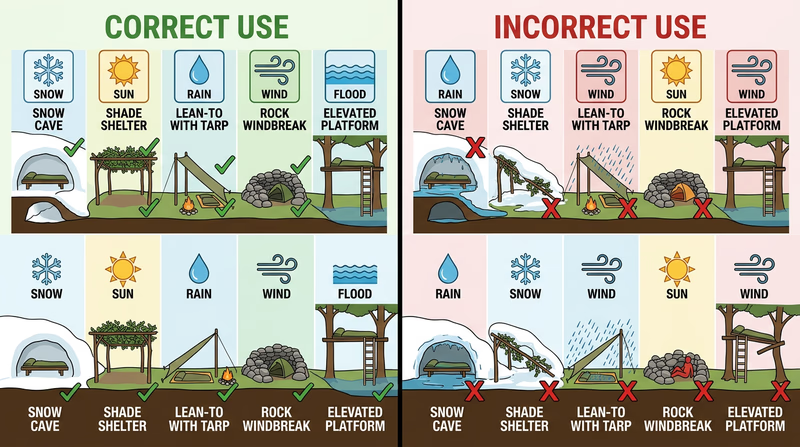
Cold and Snowy Conditions
Killer: Hypothermia (core temperature drops below 95°F)
Survival Strategy
Insulation is everything. Your body loses heat 25 times faster to snow and cold than to air at the same temperature. You need insulation from the ground and protection from wind.
Build a shelter:
- Find a windbreak (dense trees, rock outcropping, or natural depression)
- Create a bed of pine needles, leaves, or branches (at least 6-12 inches thick)
- Build a simple lean-to: prop branches against trees or rocks, cover with bark or foliage
- In deep snow, dig a snow cave—snow is excellent insulation
Stay dry: Wet clothing kills you faster than cold. Remove wet layers. Keep dry clothes dry by using a waterproof barrier.
Layer clothing: Wear multiple thin layers that you can adjust. Remove layers before sweating; add layers before shivering.
Build a fire: In cold conditions, fire is life-saving. Focus on warmth, not cooking.
Wet Conditions
Killer: Hypothermia (water cools you 25-30 times faster than air)
Survival Strategy
Stay dry: The wet itself isn’t the killer—it’s the evaporative cooling. Get out of water, get out of wet clothes, get dry.
Build a waterproof shelter: Your shelter must shed water. A lean-to covered with bark, branches, and leaves works if tilted to shed rain. A cave or overhanging rock is ideal.
Build a fire: Wet wood burns if you find dry tinder and kindling first. Look for wood protected under larger logs or rocks.
Key steps:
- Get out of wet clothes or at least wring them out
- Build a shelter that keeps rain off
- Build a fire for warmth and drying
- Stay put once sheltered (wandering in rain causes exhaustion)
Hot and Dry Conditions
Killer: Dehydration and heat exhaustion
Survival Strategy
Shade is your shelter. In extreme heat, a covered area is more important than a traditional shelter. Any source of shade—overhanging rocks, dense trees, a lean-to—reduces heat stress.
Reduce activity: Don’t hike during peak heat (10 AM - 4 PM). Move during early morning and evening.
Conserve water: Don’t ration excessively, but don’t waste it either. Sipping regularly is better than binge-drinking.
Find water: Look for water sources—seeps in rocks, water-filled plants, digging in dry creek beds. Without water, you’ll die in days.
Key steps:
- Find or create shade
- Rest during heat of day
- Move during cooler hours
- Find water as absolute priority
- Wear light colors to reflect heat
Windy Conditions
Killer: Wind chill (wind increases heat loss dramatically)
Survival Strategy
Break the wind. Wind magnifies cold. A 30°F day with 20 mph wind feels like -10°F (wind chill). You need shelter that breaks the wind.
Find or create windbreak:
- Dense trees block wind
- Rock outcroppings shelter you
- Build a shelter with a strong windward side
- Bury shelter partially in earth for added protection
Layer clothing: Wind can find gaps in single layers. Multiple layers trap dead air (the actual insulation).
Keep humidity down: Wind evaporates moisture, including from your skin and breath. This increases heat loss.
Key steps:
- Identify wind direction
- Build shelter on the downwind (protected) side of terrain or trees
- Create windbreak using packed snow, logs, or branches
- Layer clothing
- Limit exposed skin
Water Conditions (On or At Water)
Killer: Hypothermia, drowning
Survival Strategy
Assume water rescue isn’t coming immediately. Your priority is staying afloat, staying warm, and signaling rescuers.
If in water:
- Tread water or float to conserve energy
- Assume a Heat Escape Lessening Posture (HELP): curl into a ball to minimize heat loss
- If in a group, huddle together for warmth
- Wear bright clothing (helps rescuers spot you)
If capsized:
- Stay with your boat if possible (easier for rescuers to spot)
- Move toward shallower water or shore
- Help other swimmers if possible
If stranded on shore/island:
- Find freshwater source (often inland from shore)
- Build shelter and fire visible to rescuers
- Build signal mirror or use bright cloth
- Don’t attempt to swim to shore unless certain you can make it