Req 8 — Water Treatment
You can survive weeks without food but only days without water. Finding water in the wilderness is often easy—streams, lakes, and springs are common. The problem: untreated water contains parasites, bacteria, and viruses that cause dangerous illnesses. You must treat water before drinking it. This requirement teaches you three reliable treatment methods.
Why Water Treatment Matters
Common Waterborne Pathogens
Bacteria (Giardia, E. coli, Campylobacter):
- Cause severe diarrhea, cramps, nausea
- Can last 2-3 weeks even with treatment
- Dehydration from diarrhea becomes a survival threat
- Common in wild water, especially downstream from wildlife
Viruses (Hepatitis A, Rotavirus, Norovirus):
- Less common in wilderness than bacteria
- Cause severe gastrointestinal illness
- Most dangerous at higher elevations or near human settlements
- Require specific treatment methods
Parasites (Cryptosporidium):
- Highly resistant to many treatment methods
- Cause severe diarrhea lasting weeks to months
- Particularly dangerous for children and immunocompromised people
- Present in most natural water sources
The “Danger” — Untreated Water
Even clear, cold-looking water can be contaminated. A stream fed by mountain snow looks pure but can be teeming with Giardia from beaver or muskrat upstream.
Rule: Treat all water. No exceptions. Clear water is not safe water.
Method 1: Boiling
Boiling is the most reliable treatment method. Heat kills all pathogens.
How Boiling Works
High heat denatures proteins in pathogens’ cells, destroying them. Boiling also removes some volatile chemicals.
Effectiveness:
- Kills bacteria: ✓
- Kills viruses: ✓
- Kills parasites: ✓
- Removes chemical contaminants: Partial (some volatiles evaporate, but dissolved minerals remain)
Boiling Protocol
In normal conditions:
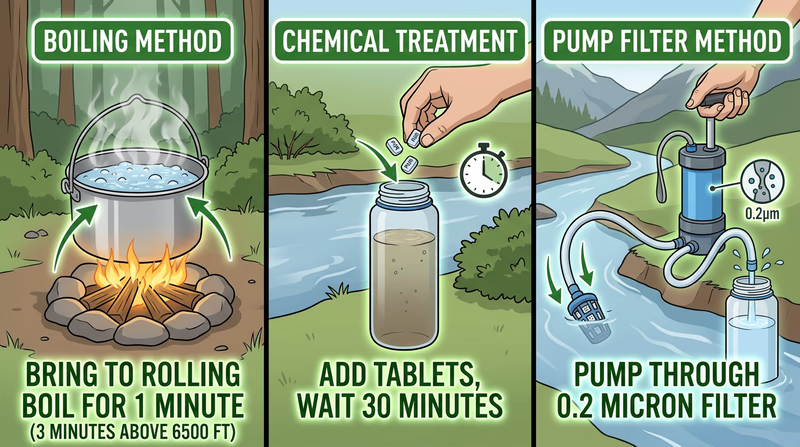
- Bring water to a rolling boil (100°C / 212°F)
- Boil for at least 1 minute
- Let it cool before drinking
At high altitude (above 6,500 feet):
- Boil for at least 3 minutes
- Water boils at lower temperatures at elevation, so longer boiling is needed
With unclear water (cloudy, discolored):
- Filter first (remove sediment)
- Then boil
- Sediment can harbor pathogens—pre-filtering helps
Advantages
- No equipment needed (just heat and a container)
- No filters to carry or maintain
- Most reliable method (nearly 100% effective)
- Works in any weather
Disadvantages
- Requires fuel (fire or stove)
- Takes time (boiling + cooling)
- Hot water is uncomfortable in hot weather
- Doesn’t remove minerals or taste issues
- Heavy fuel load if treating large quantities
Demonstration
When showing boiling to your merit badge counselor:
- Collect untreated water from a natural source (stream, pond, etc.)
- Heat it to a rolling boil (not just hot—actual bubbles)
- Maintain boil for the required time (1 minute normal, 3 minutes at elevation)
- Let it cool
- Describe what you’ve done and why it’s effective
Method 2: Water Purification Tablets
Chemical tablets (Iodine or Chlorine Dioxide) kill pathogens chemically. They’re lightweight, reliable, and easy to use.
How Chemical Purification Works
Iodine or chlorine dioxide oxidizes pathogens’ cellular structures, destroying them.
Effectiveness:
- Kills bacteria: ✓
- Kills viruses: ✓
- Kills parasites: Partial (Iodine is weak against Cryptosporidium; Chlorine Dioxide is better)
- Removes chemical contaminants: No
Iodine Tablets
How to use:
- Fill a container with untreated water
- Drop one tablet per liter/quart
- Wait 30 minutes (or longer in cold water)
- Water is ready to drink
Contact time matters:
- Warm water: 30 minutes
- Cold water: 1-2 hours
- Very cold water: Several hours
Taste: Iodine gives water a metallic, slightly bitter taste. Some people don’t mind it; others find it unpleasant.
Downsides:
- Metallic taste
- Not ideal for long-term use (iodine can affect thyroid in people taking it for months)
- Weak against Cryptosporidium
Chlorine Dioxide Tablets
How to use:
- Fill a container with untreated water
- Drop one tablet per liter/quart (follow package directions)
- Wait 30 minutes
- Water is ready to drink
Advantages over Iodine:
- Better taste (less metallic)
- More effective against Cryptosporidium
- Better for extended use
Downsides:
- More expensive than iodine
- Still takes 30 minutes to work
Advantages of Tablets
- Ultra-lightweight (a month’s supply weighs ounces)
- Cheap ($10-20 for hundreds of treatments)
- No equipment needed
- Long shelf life (stable for years)
- Works in any weather, any temperature
Disadvantages
- Chemical taste/odor
- Takes 30 minutes to work
- Doesn’t remove sediment
- Not ideal for large quantities
- Some people can’t use iodine tablets
Demonstration
When showing tablet purification:
- Fill a container with untreated water
- Add a tablet following package directions
- Set timer for the required wait time
- Once complete, drink it and describe the process
- Note the taste and explain why tablets work
Method 3: Water Filtration
Filters remove particles and can kill/trap some pathogens. Common types: pump filters, gravity filters, straw filters.
How Filters Work
Mechanical filtration:
- Water passes through a porous membrane
- Particles and some pathogens get trapped in the pores
- Works against bacteria and parasites
- Less effective against viruses (viruses are very small)
Absorption filters (activated charcoal):
- Charcoal absorbs some chemicals and improves taste
- Primarily addresses chemical contaminants
- Not primary pathogen treatment
Common Filter Types
Gravity filters (like LifeStraw bags):
- Hang a bag of untreated water
- Water drips through a filter
- Takes 30 minutes to several hours
- No effort required once filled
- Portable and lightweight
Pump filters (like Katadyn):
- Push/pull to force water through a filter
- Fast (fills bottle in 1-2 minutes)
- Effective against bacteria and some parasites
- Requires maintenance and cleaning
- More durable for extended trips
Straw filters (like LifeStraw):
- Drink directly from the water source through a straw
- Instant purification as you drink
- Lightweight and cheap
- Only works for immediate drinking (can’t store treated water)
- Less effective than pump or gravity filters
Effectiveness
- Kills bacteria: ✓
- Kills viruses: Partial (some viruses pass through)
- Kills parasites: ✓
- Removes sediment: ✓
- Removes chemicals: Partial (charcoal helps)
Advantages
- No wait time (gravity filter) or fast (pump filter)
- No chemical taste
- Improves water appearance and taste
- Reusable (good long-term investment)
- Some filter multiple liters before needing replacement
Disadvantages
- Heavy or bulky (compared to tablets)
- Requires maintenance (cleaning, replacing filters)
- Doesn’t remove all viruses (when used alone)
- Filters clog in silty water
- Broken filter = no water treatment
Demonstration
When showing filtration:
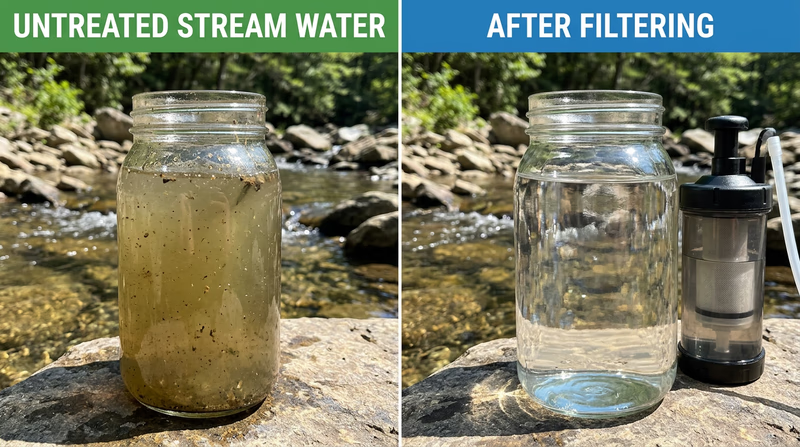
- Collect untreated water from a natural source (prefer silty or murky water to show the filter works)
- Use your filter according to type:
- Gravity filter: Fill bag and let it drip into container
- Pump filter: Pump water into container
- Straw filter: Drink directly from water source
- Show the difference between untreated and filtered water (color, clarity)
- Explain how the filter works and what it removes
Combining Methods for Maximum Safety
One method is good. Two methods are better. Some Scouts combine methods:
Boiling + Filter: Filter removes sediment, boiling ensures all pathogens die (most reliable combo)
Filter + Tablets: Filter removes sediment, tablets kill any pathogens the filter missed (good backup)
Boiling + Tablets: Redundancy—boiling should have killed everything, but tablets ensure any survivors are eliminated
In a real survival situation with questionable water, combining methods isn’t overkill—it’s smart.
Sediment and Taste Issues
Dealing with Silty or Cloudy Water
Pre-filter:
- Pass water through cloth to remove large particles
- Cloth doesn’t kill pathogens but removes sediment
- Makes water clearer before treatment
- Improves tablet/filter effectiveness
Fine sediment:
- Let water sit 12+ hours; sediment settles to the bottom
- Carefully pour from the top, leaving sediment behind
- Then treat
Improving Taste
Boiled water: Let it cool, aerate it (pour between containers), or add a pinch of salt
Iodine taste:
- Vitamin C (ascorbic acid) removes iodine taste after purification is complete
- Add a small amount of powdered drink mix to mask taste
- Wait 24 hours—iodine taste fades
Chlorine taste:
- Aerate the water (pour back and forth between containers)
- Vitamin C reduces chlorine taste
Demonstration Requirements
To fulfill this requirement, demonstrate three different methods. You need to:
- Show understanding: Explain what each method does and why it works
- Demonstrate the process: Walk through the actual steps for each method
- Use real water: Use untreated water from a natural source, not purified water from the tap
- Show the result: If possible, show the difference before and after treatment
Special Situations
Melting Snow for Water
Snow is typically safer than liquid water (fewer pathogens) but still needs treatment:
- Melt snow by adding it to boiling water (never eat snow—it lowers core temperature)
- Treat as normal water using one of the three methods
- Boiling during the melt process counts as treatment
Treating Large Quantities
If you need to treat a lot of water:
- Boiling: Most fuel-efficient method, but slow
- Tablets: Fast and lightweight if you have plenty of time to wait
- Filters: Most practical for large quantities (gravity filters work while you do other things)