Req 9 — Edible Plants
In a survival situation, food is a lower priority than shelter, water, or rescue. You can survive three weeks without eating. However, knowing which plants are safe to eat prevents starvation in extended situations and boosts morale. The challenge: many plants are poisonous, and misidentification can be deadly.
The Fundamental Rule
Only eat plants you can identify with absolute certainty. Don’t guess. A single toxic plant can kill you or cause severe illness. When in doubt, don’t eat it.
Finding Edible Plants in Your Area
Research Before You Go
- Learn your local flora: What plants grow in your region? What’s edible?
- Field guide: Carry a region-specific plant guide or use your phone
- Expert consultation: Ask a local botanist, Master Naturalist, or park ranger what grows in your area
- Seasons matter: Different plants are edible in different seasons (acorns in fall, shoots in spring)
Safe Identification
Plant identification requires noting:
- Leaves: Shape, edge texture (smooth, serrated, lobed), arrangement (opposite, alternate), color
- Stem: Color, texture (smooth, hairy), growth pattern
- Flowers/Seeds: Color, shape, number of petals
- Root system: If applicable
- Smell: Some plants have distinctive odors
- Growth habitat: Where it grows (near water, in forest, on rocks)
Cross-check with a guide: Find the plant in your field guide and match every detail. One match isn’t enough—match multiple characteristics.
Common Edible Plants (Examples from Typical Regions)
Note: These examples are common in North America. Your region will have different plants. Research YOUR area’s plants specifically.
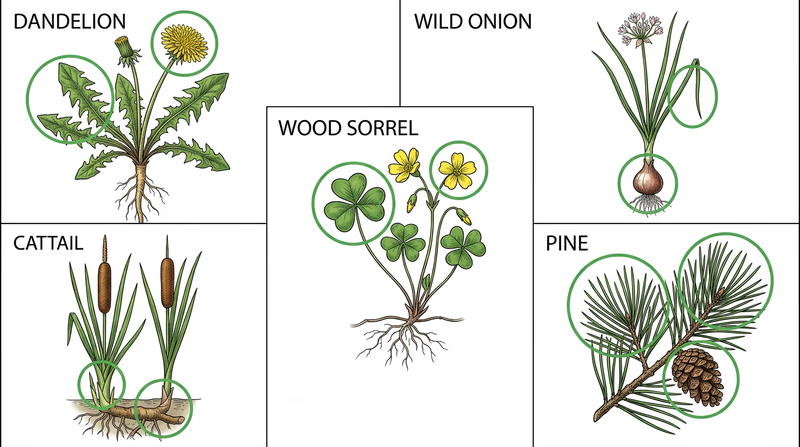
Plant 1: Dandelion (Taraxacum officinale)
Identification:
- Bright yellow flowers (ball-shaped, multiple petals)
- Deeply lobed leaves (resembling teeth—“dent de lion” = lion’s tooth)
- Milky sap when stem is broken
- Grows in lawns, fields, roadsides
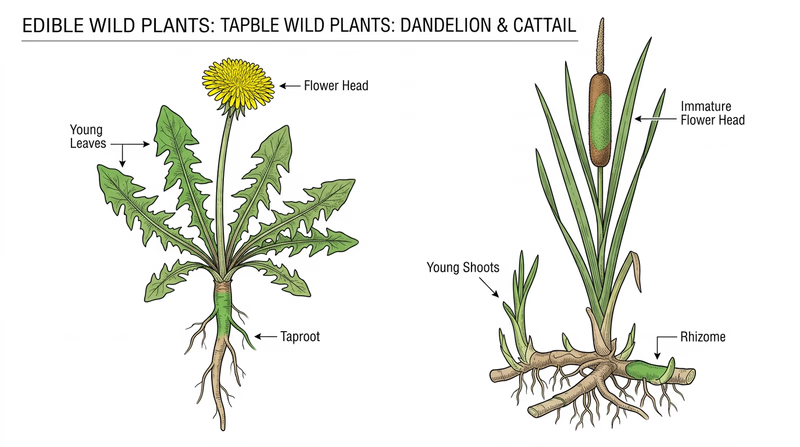
Edible parts:
- Young leaves (bitter, nutritious)
- Flowers (sweet)
- Roots (can be roasted like coffee or eaten boiled)
Preparation:
- Leaves: Boil to reduce bitterness, or eat raw if young and tender
- Flowers: Can be eaten raw, made into wine, or fried
- Roots: Dig up, clean, roast in oven until dark, then grind for coffee substitute
Nutrients: High in vitamins A, C, K; minerals like iron and calcium
Season: Spring (young leaves are best); flowers in spring/early summer; roots fall/winter
Plant 2: Wild Onions/Garlic (Allium species)
Identification:
- Grass-like leaves
- Distinctive onion or garlic smell (the key identifier)
- Small white, pink, or purple flowers in clusters
- Bulbs underground
Edible parts:
- Leaves (raw or cooked)
- Bulbs (raw or cooked)
- Flowers (raw or cooked)
Preparation:
- Raw: Slice leaves or bulbs into salads
- Cooked: Boil, roast, or fry like domestic onions
Safety note: The smell is the most reliable identifier. If it doesn’t smell like onion/garlic, it’s not a wild allium.
Season: Spring (leaves), summer (flowers), fall (bulbs)
Plant 3: Wood Sorrel (Oxalis species)
Identification:
- Heart-shaped or three-lobed leaves (clover-like)
- Yellow, pink, or white flowers
- Slightly tangy/sour taste when chewed (contains oxalic acid)
- Delicate, low-growing plant
Edible parts:
- Leaves (raw or cooked)
- Flowers (edible and pretty)
- Seed pods (edible)
Preparation:
- Raw: Leaves in salads (tart, lemony flavor)
- Cooked: Boil or steam
- Seed pods: Can be eaten raw or pickled
Safety note: Contains oxalic acid. Safe in moderation but don’t eat large quantities regularly.
Season: Spring through fall
Plant 4: Cattails (Typha species)
Identification:
- Grows near water (marshes, ponds, streams)
- Long, blade-like leaves
- Brown, fuzzy flower head (looks like a corn dog on a stick)
- Thick rhizomes (underground stems) in mud
Edible parts:
- Young shoots (like asparagus)
- Inner core of shoots (raw or cooked)
- Immature flower heads (like corn on the cob)
- Rhizomes (starchy, potato-like)
Preparation:
- Shoots: Boil or roast
- Flower heads: Boil, then butter like corn
- Rhizomes: Dig up, clean, boil or roast
Safety note: Ensure no pesticides have been used on the water source.
Season: Spring (shoots), summer (flower heads), fall/winter (rhizomes)
Plant 5: Pine Nuts and Pine Needles (Pinus species)
Identification:
- Evergreen tree with needle-like leaves
- Distinctive cones (various sizes/shapes depending on species)
- Some species produce large nuts in cones
Edible parts:
- Pine nuts (from inside cones)
- Needles (tea)
- Inner bark (emergency food)
Preparation:
- Nuts: Crack open cones, extract nuts, eat raw or roast
- Needles: Boil or steep in hot water to make vitamin C-rich tea
- Inner bark: Scrape from tree, cook, or eat raw (emergency food)
Safety note: Avoid Ponderosa Pine and Norfolk Island Pine (toxic). Most pine species are edible.
Season: Nuts depend on species (fall for many); needles year-round; bark year-round (emergency)
Plants to Avoid
Poisonous Look-Alikes
Many edible plants have dangerous poisonous cousins:
Poison Hemlock vs. Wild Carrot/Parsnip:
- Poison hemlock has purple/red blotches on the stem and a foul smell
- All parts are deadly (causes severe skin burns and organ failure)
- When in doubt, don’t eat ANY wild carrot/parsnip
Deadly Nightshade (Belladonna) vs. Wild Berries:
- Nightshade has distinctive flowers (tubular, purple/black berries)
- All parts are deadly (causes paralysis, death)
- Never eat wild berries unless 100% certain of ID
Death Camas vs. Wild Onion:
- Death camas has NO onion/garlic smell (this is the key difference)
- All parts are deadly
- If it doesn’t smell like onion, don’t eat it
The Rule
If you’re not absolutely certain, don’t eat it. Food poisoning can be deadly in a survival situation. Mild hunger for a few days is far better than severe poisoning.
Preparation Methods
Boiling
Most wild plants benefit from boiling:
- Removes bitterness
- Softens tough leaves
- Reduces toxins in some plants (like acorns)
- Cook in water, discard the water if the plant is known to be slightly bitter
Roasting
Good for:
- Seeds and nuts
- Root vegetables
- Inner bark
- Roast on rocks near a fire or in a makeshift oven
Raw
Safe for:
- Young leaves (tender, less bitter)
- Fruits and berries (if identified as safe)
- Some roots and tubers (though tougher than cooked)
- Flowers
Fermentation
Can make some plants more digestible and preserve them:
- Sauerkraut method (salt + time) works for certain greens
- Reduces digestive upset from some plants
Signs of Poisoning (If You Eat Something Unsafe)
Seek medical help immediately for:
- Severe burning in mouth or throat
- Uncontrollable vomiting or diarrhea
- Difficulty breathing
- Seizures
- Severe abdominal pain
- Altered vision or hallucinations
Treatment:
- Rinse mouth with water
- If available, induce vomiting (unless specifically told not to)
- Seek medical care immediately
- Bring the plant or a photo if possible (helps doctors identify poison)
Researching Your Area
Getting Started
- Find a field guide for your region (check library, outdoor stores)
- Take a class from a local naturalist or university extension
- Join a foraging group to learn from experienced people
- Visit parks with educational signs identifying plants
- Use iNaturalist app to identify plants and verify with community
Resources for Research
- Regional field guides (get specific to your state/region)
- University extension programs (often free, plant identification)
- Local botanical gardens
- Master Naturalist programs
- Online plant identification forums (with caution—verify information)
Practical Exercise: Describing Five Plants for Your Counselor
When preparing for your counselor meeting:
- Choose five plants that actually grow in your area
- Research each thoroughly:
- What does it look like? (detailed description)
- When does it grow? (season)
- How is it prepared? (cooking method, safety precautions)
- What parts are edible? (leaves, roots, flowers, seeds)
- Create a simple reference card with:
- Plant name
- Identification characteristics
- How to prepare it
- Season
- If possible, show samples or bring photos
- Practice explaining each plant clearly
Additional Food Sources
Beyond plants, remember:
Insects: Crickets, grasshoppers, termites, ants are edible and high in protein (but only if safe to eat—some have toxic defenses)
Fish: If you can catch them, fish are excellent nutrition
Small animals: Rabbits, squirrels, mice—if you can trap them (more difficult than plants)
Eggs: Bird eggs are edible (but not always legal or ethical to take)
Nuts: Acorns, walnuts, hickory nuts (must be properly processed to remove toxins)
Plant knowledge is your most reliable food source in a survival situation.