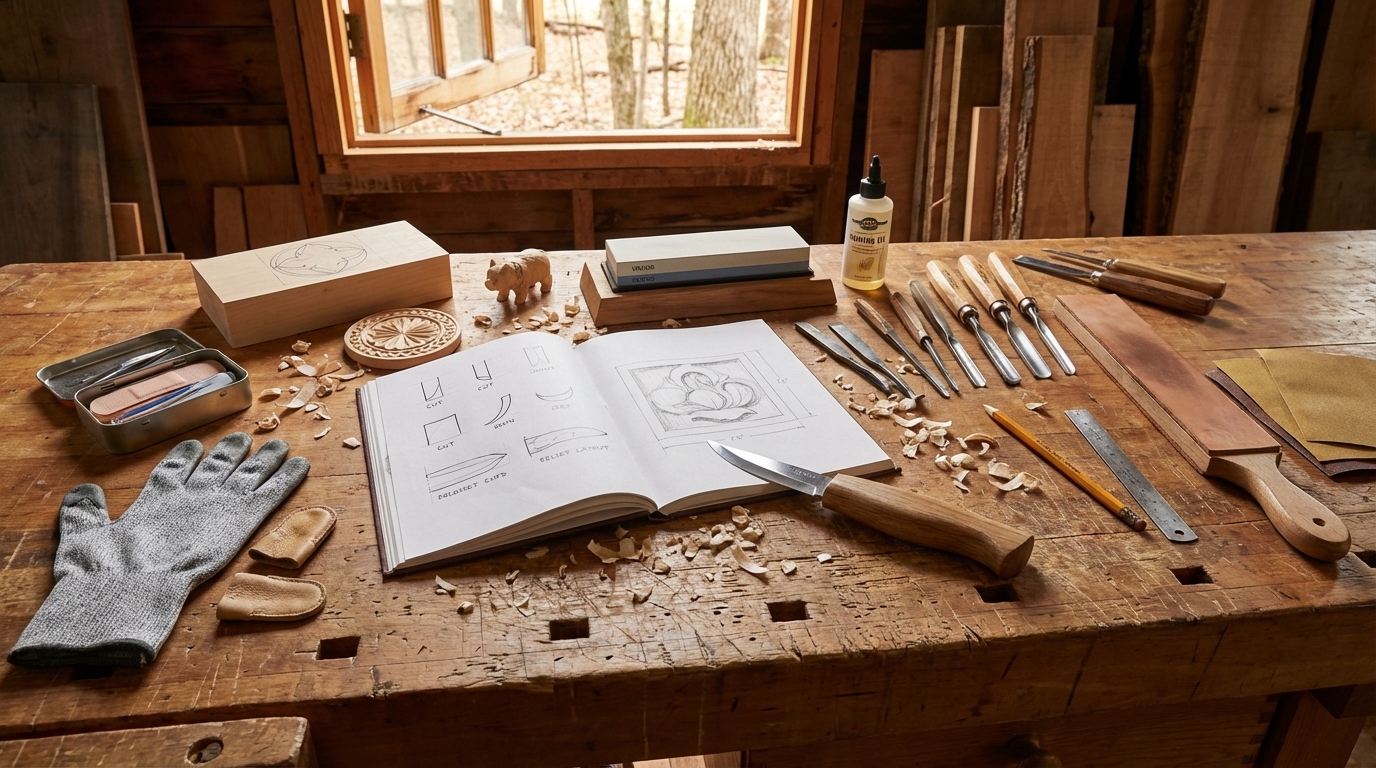
 Getting Started
Introduction & Overview
Wood carving turns a plain block or branch into something useful, funny, beautiful, or all three. It teaches patience, hand control, and planning because every cut changes the shape of the wood for good.
For Scouts, that makes wood carving more than an arts-and-crafts project. It is a practical skill that blends tool safety, design, and steady workmanship—the same habits that matter in camping, shop work, and many trades.
Then and Now
Then
People have carved wood for thousands of years. Long before factories could stamp out identical objects, families and craftspeople made spoons, bowls, toys, religious figures, signs, tools, and decorations by hand. In many places, carving was not a hobby at all—it was simply how everyday objects got made.
Traditional carving styles grew out of local needs and local woods. Scandinavian chip carving decorated boxes and plates with crisp geometric patterns. Folk artists carved animals and human figures. Walking sticks, tool handles, canoe paddles, and cooking tools were shaped to be both useful and attractive.
Now
Today, wood carving is still alive in workshops, art studios, reenactment camps, and Scout camps. Some carvers focus on wildlife figures or spoon carving. Others make signs, relief panels, neckerchief slides, chess pieces, or detailed decorative patterns.
Modern carvers also have better steels, safer clamps, cut-resistant gear, and a wider variety of sharpening tools than earlier generations did. But the heart of the craft is still the same: read the grain, use sharp tools, make controlled cuts, and let skill—not force—do the work.
Get Ready!
This badge rewards patience more than speed. You will practice safe habits, learn what different tools are for, and make cuts that look simple until you try to repeat them cleanly. Slow down, keep your tools sharp, and enjoy watching rough wood turn into a real project.
Kinds of Wood Carving
Carving in the Round
Carving in the round means shaping a three-dimensional object that can be viewed from multiple sides. Neckerchief slides, small figures, walking-stick tops, and simple animals all fit this style. You are removing wood to create full form, not just surface decoration.
Relief Carving
Relief carving starts with a flat board. Instead of shaping a full object, you cut the background away so the design appears raised above the surface. Leaves, animals, emblems, and signs often work well in relief because strong outlines show clearly.
Chip Carving
Chip carving decorates a flat surface with repeated geometric cuts. Small triangular chips pop out to make patterns of stars, diamonds, borders, and rosettes. It looks detailed, but it is built from a few repeatable knife motions.
Whittling and Utility Carving
Some carving projects are meant to be used, not displayed. Tent pegs, cooking utensils, marshmallow sticks, and simple tools all teach the same lessons about grain direction, sharp edges, and controlled pressure. Utility carving is a good reminder that craftsmanship can be practical.
Next Steps
Your first job is not making something fancy. It is learning how to carve without hurting yourself, your tools, or the people around you.