Req 4 — Practice the Basic Cuts
This is an inherited-action requirement: the real task is to show each cut clearly and under control. Think of these cuts as the carving alphabet. Most projects in Req 6 and Req 7 are built from them.
Requirement 4a
What the paring cut does
A paring cut removes a small amount of wood toward your body in a very controlled way. It is useful for tight spaces, gentle shaping, and light cleanup work where a bigger stroke would be clumsy.
How to show a paring cut
Keep the piece supported and make a short, shallow cut. Many carvers brace the knife with the thumb of the guiding hand so the motion stays small and controlled. The point is finesse, not power.
Common mistakes
Do not take a long pull stroke. Do not carve with the wood floating in the air. Do not let the blade’s path end at your fingers or chest.
Requirement 4b
What the basic cut does
The basic cut removes a larger shaving and helps shape the general form of the project. It is often one of the first cuts you use when taking a block from rough shape to recognizable form.
What the push cut does
A push cut moves the knife away from your body under control. It is especially useful when the grain direction or the shape of the wood makes a pull cut awkward.
How to show them well
For both cuts, keep your elbows in, use short motion, and cut with the grain when possible. Your counselor is looking for steady control and proper body position—not speed.
Requirement 4c
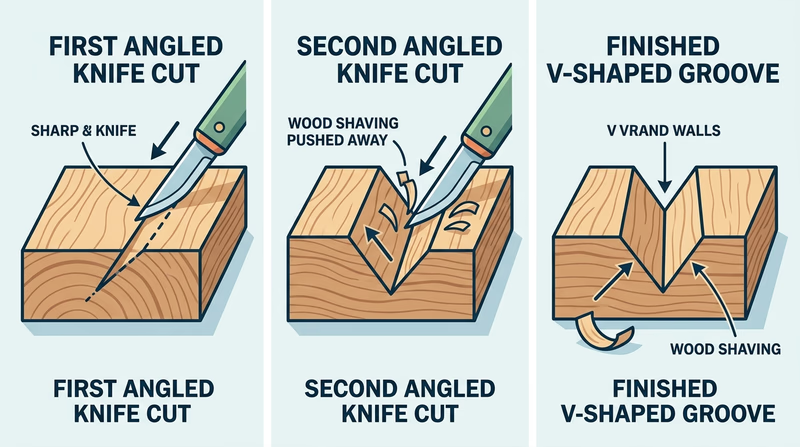
What the V-cut does
A V-cut makes a narrow groove with sloping sides. It is used for sharp detail lines, borders, feather lines, fur texture, and features like the corners of eyes or decorative separation lines.
How to show a clean V-cut
The cut is usually made by forming two angled cuts that meet. The depth and spacing need to stay even. If the angles wander, the groove looks ragged instead of crisp.
Where it matters later
This cut becomes especially valuable in relief carving and in decorative detail on carving-in-the-round projects. Even simple neckerchief slides look more finished when line work is neat.
Requirement 4d
What the stop cut does
A stop cut sets a boundary. It tells the wood where a later cut should stop so fibers break cleanly instead of tearing past the line.
How to show a stop cut or score line
Make a deliberate line first, then bring another cut toward it. The stop cut protects sharp edges and helps you define ears, borders, shoulders, feathers, or relief backgrounds.
Why it is so useful
Many beginner projects get fuzzy edges because the carver skips this step and tries to remove wood in one move. A stop cut slows the process down in a good way and gives the carving cleaner shapes.
What your counselor will notice
Good demonstration habits for every cut
- Your setup: Stable seat, supported wood, clear workspace.
- Your blade control: Short, deliberate cuts instead of forceful slashes.
- Your body position: Hands and body out of the knife’s travel path.
- Your results: Clean surfaces, clear grooves, and controlled depth.
By now you can see that technique and material work together. The next step is choosing wood that matches the kind of carving you want to do.