Req 2b — Wood Identification
Different woods have different personalities. Some are hard and strong, perfect for furniture that will last generations. Others are soft and easy to carve, ideal for a beginner’s first project. Learning to identify wood species by sight, touch, and even smell is a fundamental woodworking skill.
Hardwoods vs. Softwoods
Before diving into specific species, understand the two main categories:
Hardwoods come from deciduous trees (trees that lose their leaves in fall). Examples: oak, maple, walnut, cherry. They are generally denser, more durable, and more expensive. They are the go-to choice for furniture and cabinetry.
Softwoods come from coniferous trees (evergreens with needles and cones). Examples: pine, cedar, spruce, Douglas fir. They are lighter, easier to work with hand tools, and more affordable. They are widely used for construction, outdoor projects, and learning.
Six Woods Worth Knowing
Here are six species that are widely available, commonly used in woodworking, and good candidates for your wood block collection. You are not limited to these — your counselor may suggest other species that are locally available.
1. White Oak
Category: Hardwood Color: Light tan to medium brown Grain: Prominent, with distinctive ray flecks in quarter-sawn boards Key qualities: Very strong, rot-resistant, heavy, and durable. Takes stain and finishes beautifully. Best uses: Furniture, flooring, outdoor projects, boat building, barrel making (whiskey and wine barrels are traditionally made from white oak) Working notes: Hard on tool edges. Pre-drill for screws to prevent splitting.
2. Hard Maple (Sugar Maple)
Category: Hardwood Color: Creamy white to light golden Grain: Fine and even, sometimes with “bird’s eye” or “curly” figure Key qualities: Extremely hard and dense. Resists denting and wear. Finishes to a smooth, almost glass-like surface. Best uses: Cutting boards, butcher blocks, workbenches, flooring, bowling alleys, musical instruments Working notes: Dulls tools quickly. Glues well. Does not absorb stain evenly (use gel stain or clear finish to show off the natural color).
3. Black Walnut
Category: Hardwood Color: Rich dark chocolate brown heartwood with lighter sapwood Grain: Straight to slightly wavy, with a luxurious natural luster Key qualities: Moderately hard. Naturally beautiful without stain. Machines and carves well for a hardwood. Naturally resistant to decay. Best uses: Fine furniture, gun stocks, decorative boxes, turned bowls, cutting boards (often paired with maple for contrast) Working notes: Dust can cause skin and respiratory irritation — always wear a dust mask when sanding walnut.
4. Eastern White Pine
Category: Softwood Color: Creamy white to light yellow Grain: Straight and even, with small tight knots Key qualities: Very soft, lightweight, and easy to work with hand tools. Affordable and widely available. Takes paint well. Best uses: Shelving, trim, boxes, beginner projects, painted furniture, carving Working notes: Dents easily. Not great for tabletops or surfaces that take abuse. Can be “gummy” — pine pitch can clog saw teeth.
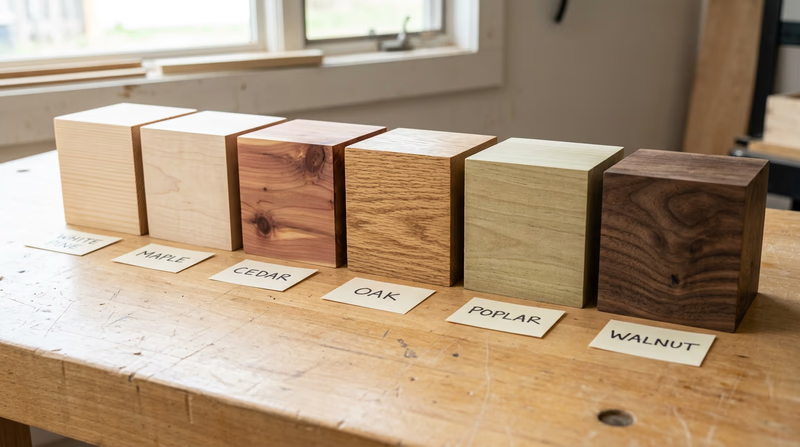
5. Western Red Cedar
Category: Softwood Color: Reddish-brown to pinkish Grain: Straight and even Key qualities: Lightweight, naturally rot-resistant, and insect-resistant. Has a distinctive pleasant aroma. Very dimensionally stable (resists warping and swelling). Best uses: Outdoor furniture, deck boards, fence posts, garden beds, closet lining, shingles Working notes: Very soft — scratches and dents easily. Cedar dust can cause respiratory irritation in some people.
6. Poplar (Tulip Poplar)
Category: Hardwood Color: Pale cream to greenish-yellow (heartwood sometimes has purple or dark green streaks) Grain: Straight and uniform Key qualities: One of the softest hardwoods — easy to work with both hand and power tools. Inexpensive. Takes paint exceptionally well. Glues and screws easily. Best uses: Painted furniture, drawer sides, interior trim, jigs and shop fixtures, practice projects Working notes: Not attractive enough for clear-finished fine furniture (the green tint is unusual). But it is one of the best learning woods because it is cheap, forgiving, and available everywhere.
How to Build Your Collection
Wood Block Collection Tips
Getting your six samples ready
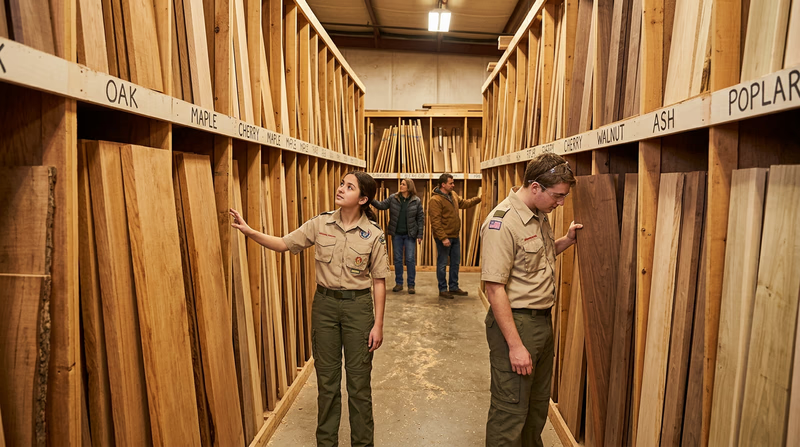
- Visit a local lumberyard or hardwood dealer: Many will give or sell you offcuts and scraps perfect for a collection.
- Ask a local woodworker: Experienced woodworkers often have scrap bins full of labeled species.
- Cut blocks to a consistent size: 3" × 5" × ¾" works well — big enough to see grain detail, small enough to carry.
- Sand one face smooth and leave one face rough: This shows both the working surface and the raw texture.
- Label each block clearly: Include the species name, whether it is a hardwood or softwood, and one or two key uses.
- Apply a clear finish to one end: This shows how the wood looks when finished versus raw.