Req 7 — Woodworking Careers
Woodworking is not just a hobby — it is a career path with real demand, good pay, and deep personal satisfaction. Talking with a professional gives you a window into what working with wood every day actually looks like.
Finding Someone to Talk To
You need to find a cabinetmaker or finish carpenter willing to spend some time with you. Here are some ways to find one:
- Ask your merit badge counselor — they may know someone personally.
- Search online for local custom cabinet shops, furniture makers, or millwork companies.
- Visit a local lumberyard or hardwood dealer and ask who they sell to.
- Check with your school — shop teachers often have industry contacts.
- Look for woodworking guilds or clubs in your area — members are usually happy to talk with a young person interested in the craft.
Career Paths in Woodworking
Finish Carpenter
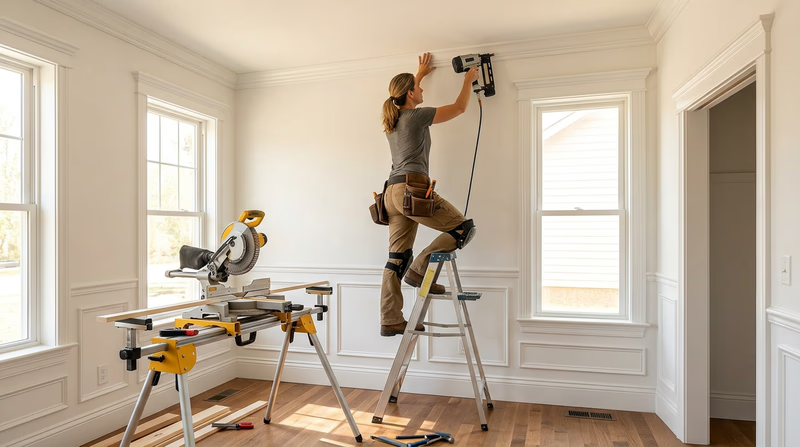
Finish carpenters install the visible woodwork in buildings — trim, molding, doors, windows, staircases, and built-in cabinets. Their work requires precision because every joint and surface is visible in the finished space.
- Training: Many start as general carpenter apprentices and specialize over time.
- Work environment: Construction sites (new homes and renovations), sometimes a shop for custom millwork.
- Skills needed: Precision measuring, miter cutting, coping joints, reading blueprints, patience.
Cabinetmaker
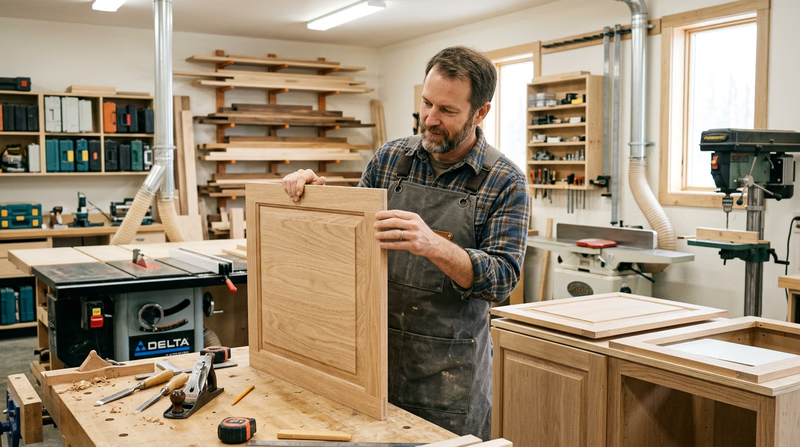
Cabinetmakers design and build cabinets, vanities, shelving systems, and custom furniture. They work primarily in a shop, using both hand tools and power machinery.
- Training: Apprenticeships, trade school programs, or on-the-job training under an experienced maker.
- Work environment: A dedicated woodworking shop with stationary power tools (table saw, jointer, planer, drill press).
- Skills needed: Design, joinery, finishing, machine operation, client communication.
Furniture Maker
Furniture makers create one-of-a-kind or small-batch pieces — tables, chairs, desks, beds. Some focus on traditional handcraft, others on modern design.
- Training: Craft schools (like the Center for Furniture Craftsmanship in Maine), apprenticeships, or self-taught through years of practice.
- Work environment: Personal shop or small studio.
- Skills needed: Design, hand tool mastery, wood selection, finishing, business management.
Woodworking Instructor
Teaching woodworking — at schools, community colleges, maker spaces, or private workshops — is a growing field as more people discover the satisfaction of working with their hands.
Questions to Ask
When you meet with a cabinetmaker or finish carpenter, use these questions as a starting point:
Interview Questions
Topics to cover in your conversation
- How did you get started in woodworking? What was your training path?
- Did you go through a formal apprenticeship? How long was it?
- What does a typical workday look like for you?
- What are your usual work hours? Do you work weekends?
- What is the pay range for someone starting out versus someone with experience?
- Are woodworkers in this area part of a union? What are the benefits of union membership?
- What do you enjoy most about your work?
- What is the most challenging part of the job?
- What advice would you give someone my age who is interested in woodworking as a career?
- How has technology (CNC machines, CAD software) changed your work?
What You Might Learn
Training and Apprenticeships
Most professional woodworkers learn through some combination of formal education and hands-on apprenticeship. Trade schools and community colleges offer programs in cabinetmaking, carpentry, and woodworking technology. Apprenticeships typically last 3 to 4 years and combine classroom instruction with paid on-the-job training under an experienced craftsperson.
Pay Rates
According to the U.S. Bureau of Labor Statistics, median annual wages for woodworkers and cabinetmakers range from approximately $35,000 to $55,000, with experienced specialists and shop owners earning more. Finish carpenters with union membership often earn at the higher end of this range.
Union Organization
In many areas, carpenters (including finish carpenters) are represented by the United Brotherhood of Carpenters and Joiners of America (UBC). Union membership typically provides:
- Negotiated wage scales
- Health insurance and retirement benefits
- Access to apprenticeship programs
- Job placement assistance